
At some point in almost every skincare journey the same question comes up — how do I start retinol for beginners without wrecking my skin?
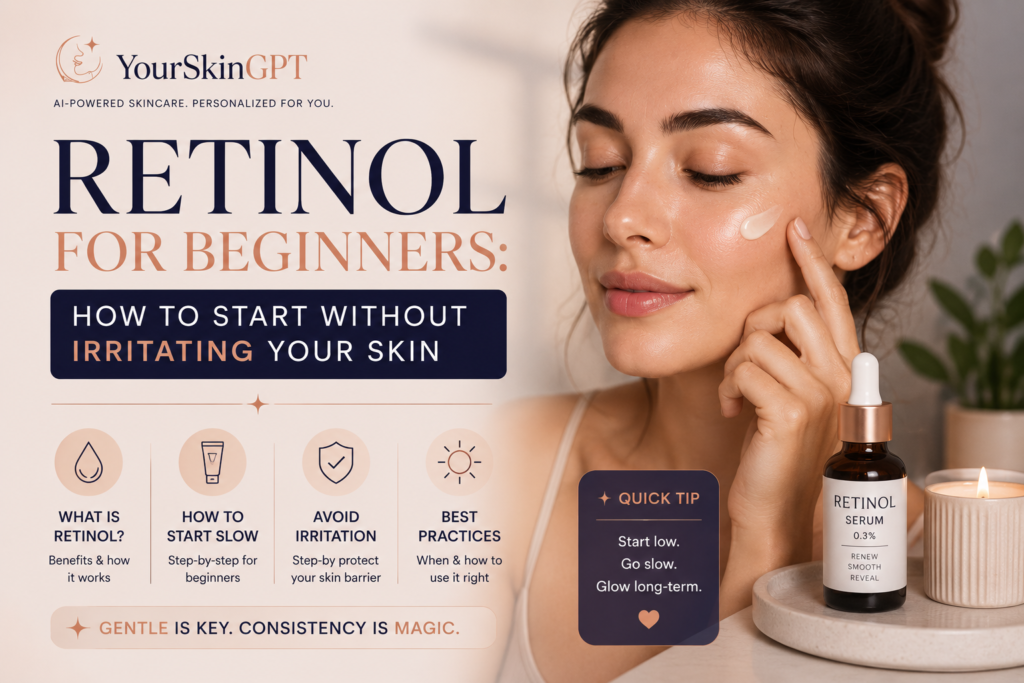
You read about it in a skincare article. A dermatologist mentions it in a YouTube video. Someone in a skincare forum swears it transformed their skin. Your friend started using it and their skin looks noticeably different three months later.
Retinol.
And then you try it. You apply it eagerly on the first night. Maybe the second night too. By the end of the first week your skin is peeling, red, and more irritated than it has ever been in your life. You conclude that retinol does not work for your skin. You stop using it. You tell other people it made your skin worse.
This story plays out so consistently across so many people that retinol has developed an undeserved reputation for being a harsh, difficult ingredient that only works for people with tough skin. That reputation is almost entirely the result of people using it incorrectly at the beginning — not a reflection of what retinol actually does when introduced properly.
Retinol is one of the most well-researched, most consistently effective, and most transformative skincare ingredients available without a prescription. Decades of clinical evidence support its benefits for skin renewal, acne, hyperpigmentation, fine lines, and long-term skin quality. The people who use it correctly and consistently see results that almost no other skincare ingredient can match.
This guide is specifically for beginners who want to start retinol the right way — building tolerance gradually, avoiding the irritation that causes most people to quit, and setting up their routine for the kind of long-term results that make retinol worth every bit of the patience it requires.
What Is Retinol and Why Does It Work?
Retinol is a form of vitamin A — specifically a retinoid, which is the family of vitamin A derivatives used in skincare. It sits in the middle of the retinoid potency hierarchy: weaker than prescription tretinoin but significantly stronger and more bioavailable than retinol esters like retinyl palmitate.
When applied to skin retinol undergoes a two-step conversion process. It first converts to retinaldehyde and then to retinoic acid — the biologically active form that interacts with receptors in skin cells to produce its effects. This conversion process is one reason retinol is less potent per concentration than prescription tretinoin which delivers retinoic acid directly — but it is also one reason retinol is better tolerated, since the gradual conversion reduces the immediate impact on skin cells.
The effects of retinoic acid on skin cells are multiple and significant.
It binds to retinoid receptors in the nucleus of skin cells and directly influences gene expression — changing how cells behave at a fundamental biological level. It accelerates cell turnover — the process by which new skin cells generated in the deeper layers of skin make their way to the surface and replace older cells. This acceleration reveals fresher, newer skin more rapidly than the natural renewal cycle would and is responsible for the improved texture and clarity that retinol produces.
It directly stimulates collagen synthesis — signaling fibroblast cells to produce more collagen, the structural protein that gives skin its firmness and volume. This is the mechanism behind retinol’s anti-ageing benefits — it does not just prevent collagen loss, it actively stimulates new collagen production in a way that very few other over-the-counter ingredients can.
It normalizes the behavior of cells lining the pores — preventing the abnormal cell shedding that causes comedones, the blocked pores at the root of acne. This is why retinol is effective for both acne and anti-ageing simultaneously — the same cell normalization that prevents breakouts also improves overall skin quality.
According to the American Academy of Dermatology, retinoids are among the most evidence-backed skincare ingredients in existence with decades of peer-reviewed research supporting their efficacy for treating acne, photoageing, hyperpigmentation, and skin texture concerns.
Why Retinol Causes Irritation — And Why That Is Manageable
Understanding why retinol causes irritation in the beginning makes it much easier to manage — because you understand that you are not having an allergic reaction or a sign that retinol is wrong for your skin. You are experiencing a predictable biological response that can be controlled with the right introduction approach.
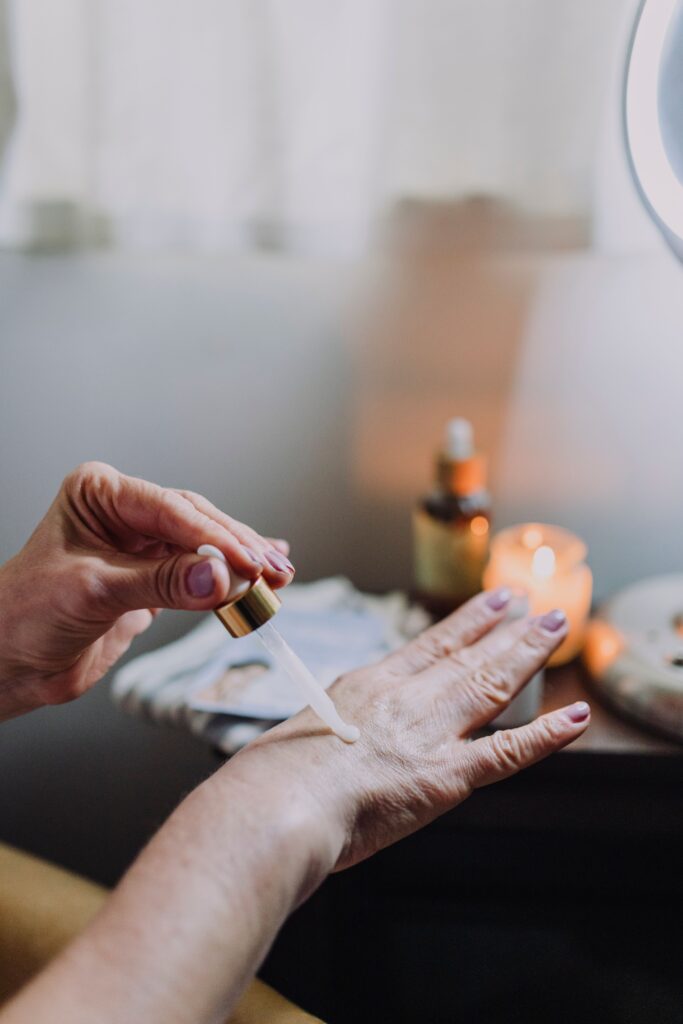
The accelerated cell turnover that retinol produces requires energy and cellular resources. When you first introduce retinol your skin has not had time to adapt to the increased cellular demands it creates. The outer skin layers — accustomed to a certain pace of renewal — suddenly find themselves renewing faster. The result is a temporary disruption to the surface layer that manifests as peeling, flaking, redness, and sensitivity.
This period is called retinization — the skin’s adaptation process to retinol. It typically lasts between two and six weeks depending on how sensitive your skin is, how high a concentration you start with, and how frequently you use it during the introduction phase.
The mistake most beginners make is applying retinol too frequently during this period before their skin has adapted. Using it daily from the start maximizes the irritation during retinization to a level that most skin cannot tolerate comfortably — and causes people to quit before the adaptation period is complete and the results begin.
A study referenced on PubMed found that retinol-induced skin irritation is dose-dependent and frequency-dependent — the same concentration produces significantly less irritation when introduced gradually versus applied daily from the start. This validated what dermatologists had observed clinically for years: the introduction approach determines tolerance as much as the concentration itself.
Research published on Healthline confirms that starting with a low concentration applied once or twice per week and building gradually over six to eight weeks produces comparable long-term results to more aggressive introduction while significantly reducing the irritation that causes abandonment.
The Retinoid Ladder — Understanding Your Options
Retinol is not the only retinoid available over the counter — and for complete beginners there is actually a gentler starting point that produces meaningful results with even less irritation risk.
Understanding the retinoid hierarchy helps you choose the right starting point for your skin.
Retinyl esters — retinyl palmitate, retinyl propionate The mildest retinoids available. They require three conversion steps to reach retinoic acid and as a result are significantly less potent than retinol at the same concentration. Appropriate for very sensitive skin that cannot tolerate even low-concentration retinol or for people who want to introduce the retinoid family as gently as possible. Results take longer and are less pronounced but they do occur with consistent use.
Retinaldehyde — retinal One conversion step from retinoic acid — more potent than retinol but still significantly gentler than prescription options. Increasingly popular in 2025-2026 as a middle-ground retinoid that delivers results closer to prescription strength while remaining available over the counter. The Medik8 Crystal Retinal range uses retinaldehyde specifically for this reason. Approximately ten times more potent than retinol at the same concentration which means a 0.1% retinal product delivers effects comparable to approximately 1% retinol.
Retinol The standard over-the-counter retinoid. Two conversion steps from retinoic acid. Available in concentrations from 0.025% to 1%. Most clinical evidence for over-the-counter retinoids exists for retinol specifically. The appropriate starting concentration for beginners is 0.025% to 0.1% — not the 0.5% or 1% concentrations that appear on many widely-available products.
Adapalene — prescription-strength retinoid now available OTC Adapalene (Differin) is a third-generation retinoid originally available only by prescription that is now sold over the counter in many countries. It is significantly more effective than standard retinol for acne and is well-tolerated relative to its potency because its mechanism of action produces less irritation than comparable-strength retinol. It is not a beginner retinoid however — it is appropriate for people who have established retinol tolerance and want to move to a stronger option.
Tretinoin — prescription only The gold standard retinoid and the most studied. Delivers retinoic acid directly without any conversion step. Significantly more potent than retinol and requires a prescription. Not appropriate for beginners — but the goal of a well-managed retinol introduction is to build the tolerance that eventually makes tretinoin accessible if desired.
Choosing Your Starting Concentration
This decision matters more than any other in a retinol introduction. Starting too high is the single most common mistake beginners make.
The correct starting concentration for a retinol beginner depends on your skin type and sensitivity level.
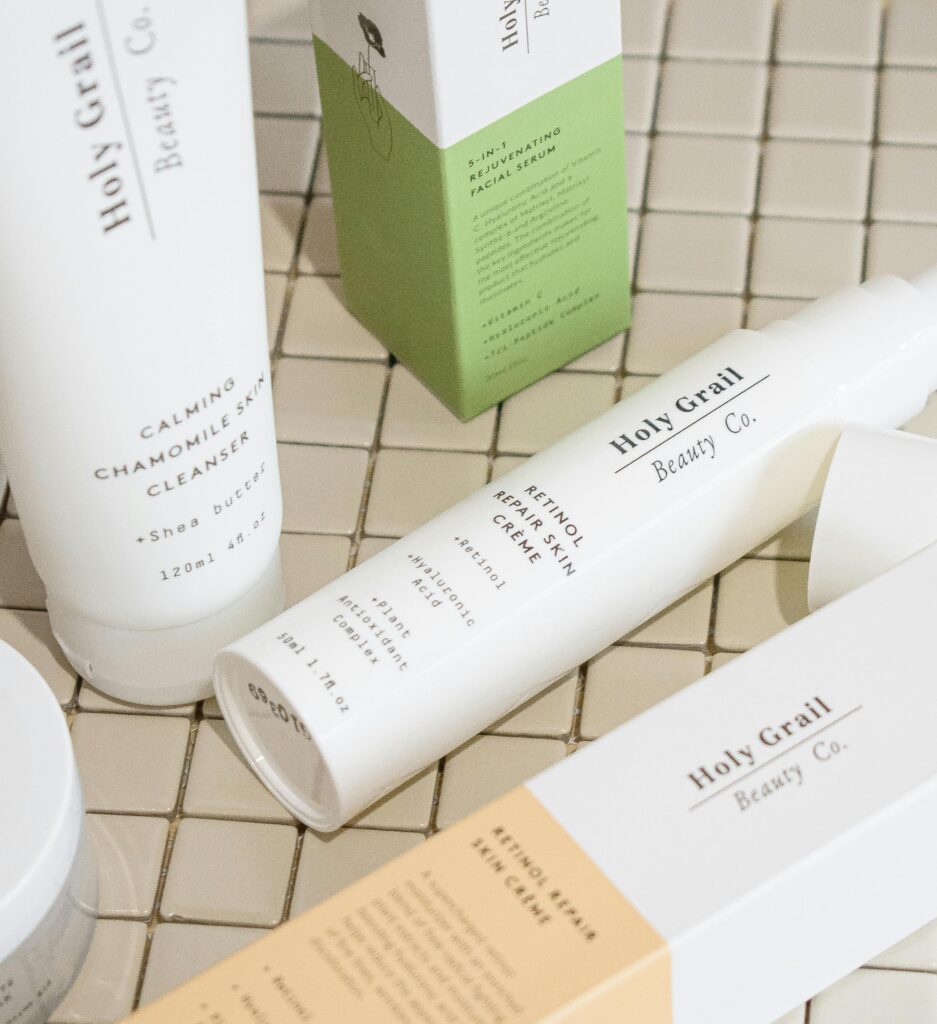
Very sensitive skin or rosacea-prone skin should start with retinyl esters or the lowest available retinol concentration — 0.025%. Yes this seems extremely low. It is appropriate precisely because sensitive skin needs the gentlest possible introduction to build tolerance without triggering a prolonged inflammatory response that takes weeks to calm.
Normal to combination skin should start at 0.1% to 0.2%. This is the concentration range where beginners experience meaningful cell turnover stimulation without overwhelming the skin barrier. The Ordinary Retinol 0.2% in Squalane is the most widely recommended starting product globally for good reason — it delivers effective results at a concentration that the vast majority of beginners can tolerate with the correct introduction approach.
Oily skin that has some existing tolerance to active ingredients can start at 0.25% to 0.3%. However starting at 0.2% and moving up after four to six weeks with no significant irritation is a safer approach even for oily skin — the extra caution during introduction pays dividends in long-term tolerance.
Do not start at 0.5% or 1% regardless of what products you have access to. These concentrations are for people who have established retinol tolerance through a gradual build-up — not for first-time users. The irritation produced by starting at these concentrations is severe enough to cause barrier damage in most beginners and nearly always results in abandonment before the adaptation period is complete.
The Correct Introduction Schedule — Week by Week
This is the information that most retinol content either glosses over or gets wrong. The schedule matters as much as the product.
Weeks 1-2: Once per week only
Apply your retinol exactly once in the first week. On a clean dry face — wait two to three minutes after patting dry before applying, since damp skin increases penetration and therefore irritation. Apply a pea-sized amount — genuinely pea-sized — to the entire face. Then apply your moisturizer on top.
Observe your skin over the following days. Some mild dryness or flaking after three to five days is normal and expected. Significant redness, burning, or peeling that persists for more than two days is a sign to wait longer between applications.
In week two apply once again — seven days after your first application. The same process. Observe again.
Weeks 3-4: Twice per week
If weeks one and two produced only mild or no irritation move to applying twice per week — separated by at least two days between applications. Sunday and Wednesday works well for most people’s schedules. Continue with your moisturizer on top after each application.
Weeks 5-8: Three times per week
If twice per week is well-tolerated move to three times per week. This is the frequency that most clinical studies use and the point at which meaningful results begin accumulating. Continue for four weeks at this frequency before considering moving up.
Months 3 onwards: Increase frequency or concentration as tolerated
After two months of three-times-per-week use without significant irritation you have two options. You can increase frequency toward four to five times per week at the same concentration — which increases results. Or you can move to the next concentration up — from 0.2% to 0.5% — while keeping frequency at three times per week. Either approach is valid. Most dermatologists recommend increasing frequency before concentration.
The skin cycling framework — two recovery nights for every retinol night — is an excellent alternative to this schedule if you want the additional structure of built-in recovery nights. Our guide on skin cycling routine covers this approach in detail.
How to Apply Retinol Correctly
The application technique directly affects both how much irritation you experience and how effective the retinol is. Small details matter more with retinol than with almost any other skincare ingredient.
Always apply to completely dry skin
Wait two to three minutes after washing and patting dry before applying retinol. Damp skin allows retinol to penetrate more aggressively — which increases both potency and irritation. On completely dry skin the penetration rate is more controlled and predictable. This is called the dry-skin method and it is the single most effective way to reduce retinol irritation without reducing its long-term efficacy.
Use a pea-sized amount for the entire face
A pea-sized amount is approximately 0.25ml — a tiny amount that barely covers a fingertip. This is genuinely all you need for the whole face. Using more does not produce better results. It produces more irritation. The concentration does the work — the volume does not.
Avoid the eye area, corners of mouth, and nostrils
These areas have thinner skin than the rest of the face and are significantly more prone to retinol irritation. Apply retinol to the central face — forehead, cheeks, chin — and leave a visible margin around the eyes, the corners of the mouth, and directly alongside the nostrils. If anti-ageing around the eyes is your goal, use a dedicated eye cream formulated with a retinol concentration appropriate for that delicate area rather than applying your regular retinol.
Press in gently — do not rub
Apply the retinol with your fingertips using a gentle pressing motion rather than rubbing it across your face. Rubbing creates friction that increases irritation and disrupts the even application that provides consistent results.
Apply moisturizer immediately after
Apply your moisturizer on top of the retinol — do not wait. The moisturizer on top does not significantly reduce retinol’s efficacy at beginner concentrations. It does significantly reduce irritation by creating a slightly occlusive layer that moderates the rate of absorption. This approach — moisturizer on top of retinol — is particularly important during the first eight weeks of introduction.
The CeraVe PM Facial Moisturizing Lotion applied immediately after retinol provides ceramides and niacinamide in a formula gentle enough for sensitized skin during the retinization period. Available at Dermstore.
The Buffer Method — For Extra Sensitive Beginners
If your skin is very sensitive or if you have already tried retinol once and experienced significant irritation there is an alternative application approach called the buffer method that significantly reduces irritation while still allowing retinol to work.
Apply your moisturizer first — to clean dry skin. Allow it to absorb for two to three minutes. Then apply your retinol on top of the moisturizer.
The moisturizer underneath the retinol slows penetration — retinol applied over a hydrated moisturizer-coated surface absorbs more slowly and more gently than retinol applied directly to bare skin. This reduces the strength of the retinization response while still allowing the retinol to penetrate and do its work over a longer absorption period.
The buffer method produces slower results than direct application — it may take twelve to sixteen weeks to achieve what direct application produces in eight to twelve weeks. But for sensitive skin or for people who have previously had bad experiences with retinol it is the approach that makes continuation possible when direct application is not.
Start with the buffer method for the first four weeks. As tolerance builds switch to direct application — moisturizer after retinol — for the next phase.
What Not to Use on Retinol Nights
This section prevents the most common combination mistakes that amplify retinol irritation dramatically.
Do not use AHA or BHA exfoliants on the same night
Both retinol and acids accelerate cell turnover and temporarily disrupt the skin barrier. Using them on the same night creates cumulative irritation that is significantly greater than either alone. Alternate them on different nights — our guide on night skincare routine covers the rotation schedule in detail.
Do not use vitamin C on the same night
Vitamin C in L-ascorbic acid form has a low pH that can increase retinol’s irritation when applied simultaneously. Use vitamin C in the morning and retinol at night — they complement each other beautifully across the day without interfering when kept to separate routines.
Do not use benzoyl peroxide on the same night
Benzoyl peroxide oxidizes retinol and renders it significantly less effective. If you use benzoyl peroxide for acne use it in the morning only and keep retinol exclusively for the evening routine.
Do not skip SPF the morning after
Retinol increases photosensitivity — skin that used retinol the night before is more susceptible to UV damage the following day. Apply SPF 50 every morning without exception. The morning after a retinol night is not the time to skip sunscreen.
Do not use multiple active serums on retinol nights
During the introduction phase keep retinol nights to three products only: cleanser, retinol, moisturizer. As tolerance builds you can add niacinamide before retinol as a buffer — niacinamide actually reduces retinol irritation and speeds adaptation. Add nothing else during the first eight weeks of introduction.
The Best Retinol Products for Beginners
These products are selected specifically for beginners — appropriate starting concentrations, well-tolerated formulas, and accessibility across different budgets.
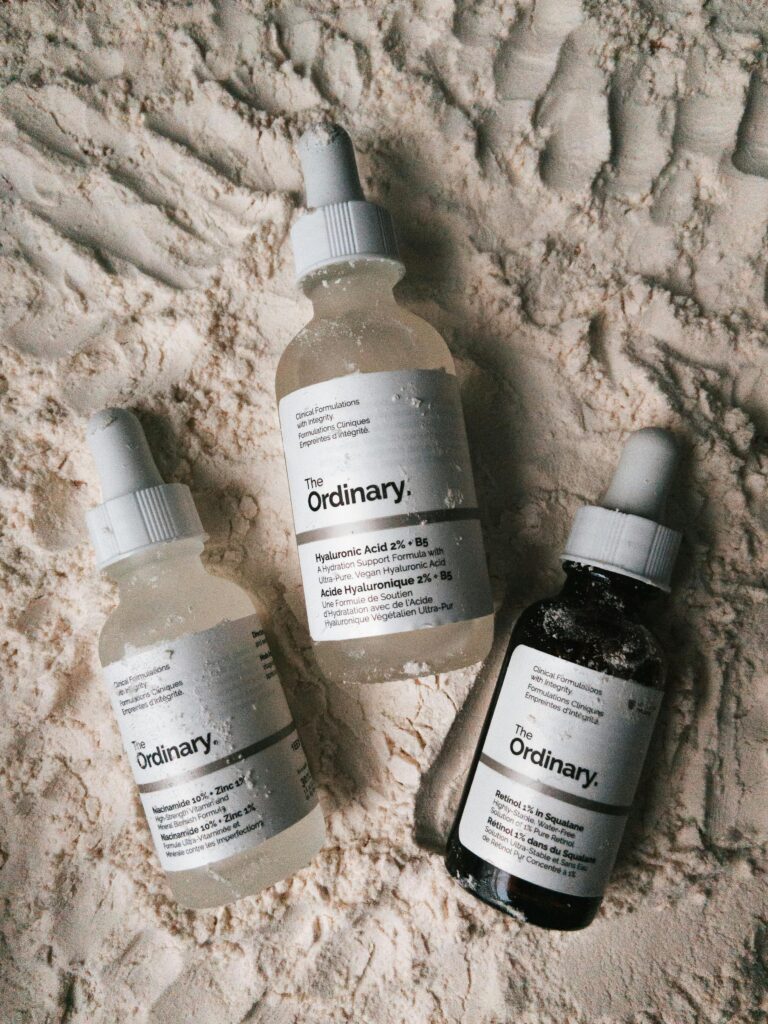
The Ordinary Retinol 0.2% in Squalane The most widely recommended beginner retinol globally and the right starting point for normal to combination skin. The squalane base is non-comedogenic and supportive of barrier function — which reduces the irritation that other bases can cause. Clear, lightweight, fast-absorbing. Under $12 and available at Sephora.
CeraVe Resurfacing Retinol Serum A beginner-friendly retinol in a ceramide and niacinamide base that simultaneously introduces retinol activity while supporting barrier function. The ceramides and niacinamide actively counteract the barrier disruption that retinol causes — making this one of the most intelligent beginner retinol formulations available. Available at Dermstore.
La Roche-Posay Retinol B3 Serum A sophisticated beginner retinol that pairs pure retinol with vitamin B3 — niacinamide — in a formula specifically designed to deliver retinol benefits with minimized irritation. Developed with dermatologists and particularly well-suited to sensitive skin that wants to start retinol without the buffer method. Available at Dermstore.
Paula’s Choice 0.3% Retinol + 2% Bakuchiol Treatment A thoughtful formulation that combines low-concentration retinol with bakuchiol — a plant-derived ingredient that has retinol-like effects on skin and has been shown to reduce the irritation of retinol when combined with it. For sensitive skin beginners who want retinol activity with the most irritation reduction possible this pairing is one of the most considered available. Available at paulaschoice.com.
Neutrogena Rapid Wrinkle Repair Retinol Serum A widely available, affordable option at a beginner-appropriate concentration. Accessible at pharmacies worldwide and a reasonable starting option for people who want to begin retinol without ordering online or visiting a specialty retailer. Available at Dermstore.
For those ready to step up: The Ordinary Retinol 0.5% in Squalane After establishing tolerance at 0.2% for six to eight weeks the 0.5% concentration delivers noticeably stronger cell turnover results. The same squalane base as the 0.2% version makes the transition straightforward. Available at Sephora.
What Results to Expect and When
Setting realistic expectations is essential for retinol success — because the people who quit before seeing results almost always do so because they expected changes that retinol produces over months to appear within weeks.
Weeks 1-4 — The retinization period Mild dryness, occasional flaking, possible temporary increased sensitivity. No visible skin improvements yet — the skin is adapting to the accelerated cellular demands. This period is building the foundation for everything that follows.
Weeks 4-8 — Early results Subtle improvement in skin texture. Pores may appear slightly refined. Skin surface feels smoother. Some people notice a very early improvement in brightness. These are the first signs that the retinol is working — small but real.
Weeks 8-12 — Meaningful results Noticeable improvement in skin texture and clarity. Fine surface lines less visible. For acne prone skin a reduction in breakout frequency and severity is typically apparent by this point. Post-acne dark marks beginning to fade more rapidly. Skin has a quality that is difficult to describe precisely — clearer, more even, more refined — that other people may comment on.
Months 3-6 — Significant transformation Meaningful fine line reduction. Measurable improvement in skin firmness and elasticity for mature skin. Significant reduction in hyperpigmentation. Pores visibly refined. This is the phase where retinol delivers on its reputation — and why the people who reach this point almost never stop using it.
Month 6 onwards — Long-term maintenance Continued collagen production, sustained skin quality improvement, and the cumulative anti-ageing benefits that compound over years of consistent use. The people with remarkable skin in their forties and fifties who have been using retinol since their twenties are the result of this long-term compounding effect.
Managing Setbacks — What to Do When Irritation Happens
Despite the best introduction approach most retinol beginners experience at least one setback — a period of increased irritation, unusual peeling, or temporary sensitivity that makes you question whether to continue.
Here is exactly what to do when it happens.
Stop applying retinol immediately and give your skin five to seven days of the basic three-step routine — gentle cleanser, ceramide moisturizer, SPF. No actives, no exfoliants, nothing beyond the essentials. This is not giving up — it is strategic recovery that allows your barrier to rebuild before you resume.
After five to seven days of recovery apply retinol again once — and note whether the irritation returns at the same severity. If it does go back to the buffer method and the once-per-week schedule for another two weeks. If it does not resume your previous schedule.
Irritation that persists beyond seven days of stopping retinol entirely may indicate a reaction to another ingredient in the formula rather than to the retinol itself. Check the other ingredients in your retinol product against your other skincare products for potential conflicts. If the reaction includes hives, swelling, or significant spreading redness beyond the application area — stop using the product and consult a dermatologist.
The most important thing during a retinol setback is perspective. A temporary increase in irritation during introduction is almost never a sign that retinol is wrong for your skin. It is almost always a sign that the introduction was too fast. Slowing down and rebuilding is not failure — it is the correct response that keeps you on the path to the results that make retinol worth the patience.
Retinol for Different Skin Concerns
Retinol addresses several different skin concerns through its core mechanism of accelerated cell turnover and collagen stimulation — but the specific results you can expect vary by concern.
For acne and acne prone skin Retinol normalizes the cell shedding behavior in pores that creates comedones — the blocked pores that develop into whiteheads, blackheads, and inflammatory acne. With consistent use it reduces new breakout formation at the same time as it fades the post-acne marks left by previous breakouts. For inflammatory acne specifically adapalene — the prescription-strength retinoid now available over the counter — is more effective than standard retinol and is the retinoid of choice recommended by most dermatologists for acne-focused treatment.
For hyperpigmentation and dark spots Accelerated cell turnover means pigmented cells are replaced by new unpigmented cells more rapidly than they would be without retinol. Combined with vitamin C in the morning and consistent SPF use retinol is one of the most effective treatments for post-inflammatory hyperpigmentation — the dark marks left by acne, the sun spots that accumulate with age, and the general uneven pigmentation that makes complexion look unclear.
For fine lines and skin ageing This is where retinol’s collagen stimulation effect is most clinically documented. After twelve to twenty-four weeks of consistent use fine lines are measurably reduced — not because the skin is plumped up cosmetically but because new collagen has been deposited in the dermis, genuinely improving the structural integrity of the skin. This is a real change at a tissue level — not a temporary visual effect.
For texture and large pores The combination of accelerated cell turnover clearing the dead cell buildup that makes texture irregular and pore normalization that reduces comedone formation produces a refinement of skin texture and pore appearance that is typically noticeable within eight to twelve weeks.
Retinol and the Rest of Your Routine
Retinol works best as part of a complete routine rather than as a standalone treatment. Understanding how it fits with the other products you are using determines how effective it is and how well you tolerate it.
In the morning your routine continues exactly as normal — gentle cleanser, vitamin C serum, moisturizer, SPF. The morning after a retinol night is an important morning to wear SPF since the increased cell turnover creates temporary photosensitivity. Do not add or change anything in your morning routine because of retinol.
In the evening on retinol nights your routine is: gentle cleanser, allow skin to dry completely for two to three minutes, retinol, moisturizer on top. Nothing else during the first eight weeks of introduction.
On non-retinol evenings your other actives can return to the rotation — niacinamide serum, AHA or BHA exfoliants on alternating nights, essence and additional serums as desired. The key is that retinol nights are kept simple and non-retinol nights are where you use everything else.
Niacinamide deserves specific mention because it is the most compatible active ingredient to pair with retinol. Applied before retinol on retinol nights it measurably reduces the irritation retinol causes during the introduction phase. The Ordinary Niacinamide 10% + Zinc 1% applied two to three minutes before retinol is a combination that dermatologists consistently recommend for sensitive beginners. Available at Sephora.
If you want to know exactly how retinol fits into a complete routine built around your specific skin type the free AI skin analysis at yourskingpt.com/skin-analysis analyzes your actual skin and builds a complete personalized routine — including whether retinol is appropriate for your current skin condition and at what concentration to start. Free in fifteen seconds with no account required.
You might also find our complete guides on skin cycling routine and night skincare routine useful for understanding exactly how to schedule retinol within a complete evening routine framework.
Frequently Asked Questions
At what age should I start using retinol? Most dermatologists suggest mid-to-late twenties as the right time to begin retinol for anti-ageing prevention — before significant ageing changes appear rather than after. For acne concerns retinol and adapalene are used from late teens onward under dermatological guidance. There is no universal right age — it depends on your skin concern and skin condition. Someone in their forties starting retinol for the first time will still see significant results — the collagen stimulation is ongoing regardless of when you start.
Can I use retinol every night eventually? Some people with established retinol tolerance do use it nightly — particularly those using lower concentrations for maintenance. Most dermatologists suggest three to five times per week as the optimal frequency for ongoing use since it delivers results while allowing adequate recovery time. Daily use at higher concentrations is associated with greater long-term barrier compromise than less frequent use at equivalent cumulative doses.
Why is my skin purging after starting retinol? Retinol purging is real and common during the first four to eight weeks. The accelerated cell turnover that retinol causes brings comedones — blocked pores that were forming under the surface — to the surface faster than they would have appeared naturally. This looks like a sudden increase in breakouts. True purging resolves within eight weeks as retinol normalizes pore behavior going forward. If breakouts continue beyond eight weeks of consistent use the issue may be a comedogenic ingredient in the formula rather than purging.
Can I use retinol during pregnancy? No — all retinoids including over-the-counter retinol are contraindicated during pregnancy due to the theoretical risk of retinoid embryopathy. Discontinue retinol when planning to become pregnant and throughout pregnancy and breastfeeding. Bakuchiol — a plant-derived retinol alternative — is generally considered safe during pregnancy and provides some comparable skin renewal benefits.
Does retinol thin the skin? This is a common misconception. Retinol temporarily increases the shedding of the outer dead skin cell layer which can make skin appear temporarily thinner during retinization. But the collagen stimulation retinol produces in the dermis actually thickens the deeper living layers of skin over time. Long-term retinol users have measurably thicker dermis than non-users — the opposite of skin thinning. The temporary surface thinning during adaptation resolves as tolerance is established.
What is the difference between retinol and retinol serum? Retinol is the active ingredient. A retinol serum is a product that delivers retinol in a serum base — typically a lightweight, fast-absorbing liquid or gel formula. Some retinol products are creams rather than serums — these often have a higher concentration of occlusive ingredients which reduces penetration and can make them more appropriate for dry skin. The active ingredient is the same regardless of the vehicle — the base affects how quickly it absorbs and how it interacts with other products in your routine.
The Bottom Line
Retinol is not a harsh ingredient that only works for people with resilient skin. It is a genuinely transformative ingredient that works for almost every skin type when introduced correctly.
The beginners who fail with retinol almost always fail for the same reason — they start too high, use it too frequently before their skin has adapted, and experience the full force of retinization before any tolerance has built. The result is irritation, barrier damage, and abandonment before the results appear.
The beginners who succeed with retinol follow the opposite approach. They start low — 0.2% or lower. They start slow — once per week for the first two weeks. They use the dry-skin method. They apply moisturizer immediately after. They stay consistent through the mild early irritation. They reach weeks eight to twelve and see their skin genuinely change.
Those are the people you see in before-and-afters that look almost unbelievable. The transformation is real. The approach to get there is patient, gradual, and entirely achievable for almost any skin type with the right starting point.
Start at the lowest appropriate concentration for your skin. Follow the weekly schedule exactly. Give it twelve weeks before judging results. The skin on the other side of that twelve weeks is worth every bit of the patience the beginning requires.
The free AI skin analysis at yourskingpt.com/skin-analysis tells you whether your skin is ready for retinol, which concentration to start with, and how to build retinol into a complete personalized routine — free in fifteen seconds based on your actual skin.
This article is for informational purposes only and does not constitute medical advice. Always consult a qualified dermatologist before starting retinol particularly if you have eczema, rosacea, or another diagnosed skin condition, or if you are pregnant or planning to become pregnant.