
Two ingredients i.e hyaluronic acid vs niacinamide . Both everywhere. Both recommended by dermatologists. Both showing up in practically every skincare product launched in the last five years.
But which one does your skin actually need?
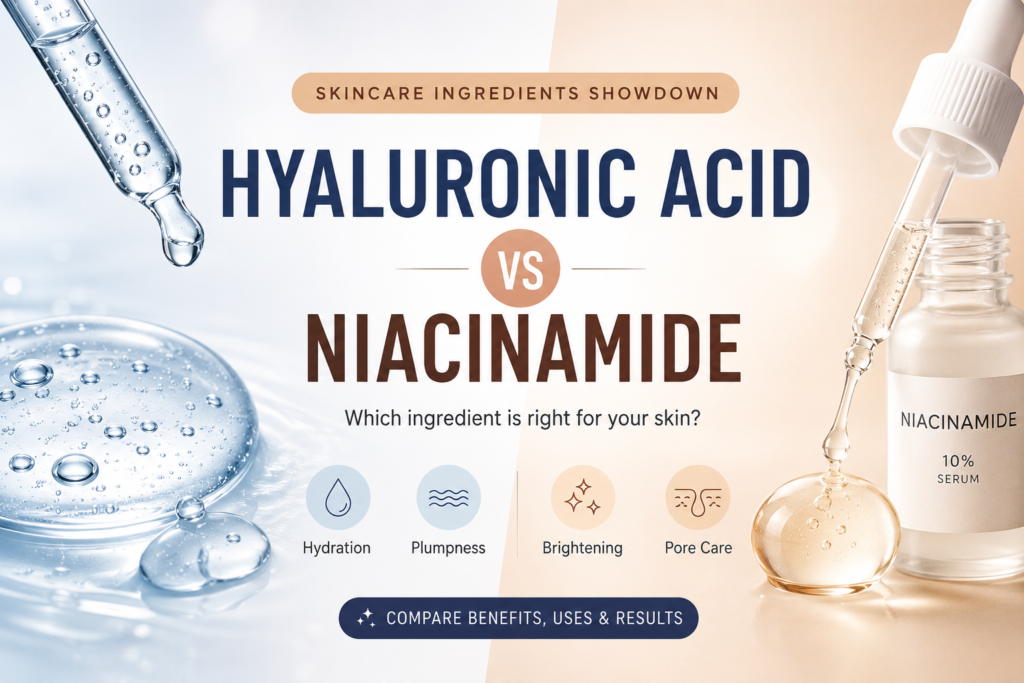
If you have ever stood in a skincare aisle holding two different serums — one with hyaluronic acid on the front, one with niacinamide — and genuinely had no idea which one to put back, this article is for you.
The honest answer is that hyaluronic acid and niacinamide work differently, target different skin concerns, and for most people the real question is not which one to choose but how to use both correctly. But before getting there it is worth understanding what each ingredient actually does — because most of what gets written about them online either oversimplifies or overclaims.
What Is Hyaluronic Acid and What Does It Actually Do?
Hyaluronic acid is a naturally occurring substance that your body produces on its own. It is found in your skin, your joints, and your connective tissue. In your skin specifically it lives in the dermis — the deeper layer beneath the surface — where it acts like a sponge, holding onto water molecules and keeping tissue plump and cushioned.
Here is the number that gets cited constantly because it is genuinely remarkable: hyaluronic acid can hold up to 1000 times its own weight in water. A single gram can hold six liters of water. This is why it became such a significant ingredient in skincare — nothing else hydrates at the same molecular level.
The problem is that your natural hyaluronic acid levels decline with age. According to research published on PubMed, hyaluronic acid content in skin decreases significantly starting in your mid-twenties and continues declining throughout life. This decline contributes directly to the loss of plumpness, the appearance of fine lines, and the dull, slightly deflated look that starts appearing in your late twenties and thirties.
Topical hyaluronic acid — applied in a serum or moisturizer — works by drawing moisture from the environment and from deeper skin layers up to the surface. It does not penetrate deeply into the dermis when applied topically, but it does create a reservoir of moisture in the upper layers of skin that keeps the surface visibly plump and hydrated.
The key things hyaluronic acid does for skin:
It provides immediate, visible hydration — skin looks plumper within hours of application. It reduces the appearance of fine lines temporarily by plumping the skin surface. It soothes dry, tight, and irritated skin by restoring surface moisture. It supports barrier function by keeping the outermost skin layers hydrated and functional. It is completely non-comedogenic and suitable for every skin type including oily and acne prone skin.
What hyaluronic acid does not do: it does not regulate oil production, it does not treat acne, it does not fade dark spots, and it does not strengthen the skin barrier structurally. It is a hydration specialist — exceptional at its specific job and limited outside of it.
What Is Niacinamide and What Does It Actually Do?
Niacinamide is vitamin B3 — a water-soluble vitamin that your skin uses in several fundamental biological processes. Unlike hyaluronic acid which primarily works by attracting and retaining water, niacinamide works by influencing how your skin cells behave.
It is one of the most multi-functional skincare ingredients in existence — and the clinical evidence behind it is unusually strong.
According to the American Academy of Dermatology, niacinamide is among the most evidence-backed ingredients for addressing multiple skin concerns simultaneously without the irritation associated with stronger actives like retinol or acids.
Here is what niacinamide measurably does at effective concentrations:
At 2% it reduces sebum production — directly addressing the root cause of oiliness and shine. At 5% it visibly minimizes pore appearance by reducing the sebum that stretches pores open and by improving skin elasticity. At 5% it also inhibits melanin transfer — the process that creates dark spots and uneven skin tone — making it one of the most effective and gentle hyperpigmentation treatments available without a prescription. At 5% and above it increases ceramide synthesis, which strengthens the skin barrier structurally. At 10% it delivers all of the above with stronger results and adds meaningful anti-inflammatory benefits that reduce redness from acne and rosacea.
A study referenced on Healthline found that 4% topical niacinamide reduced hyperpigmentation as effectively as 4% hydroquinone — a prescription-strength bleaching agent — over an eight-week period. That comparison alone explains why niacinamide has become one of the most prescribed over-the-counter ingredients by dermatologists treating hyperpigmentation.
What niacinamide does not do: it does not provide immediate visible hydration the way hyaluronic acid does. Its barrier-strengthening benefits take weeks to become visible. It is not a fast-acting ingredient — it is a consistent, long-term skin health builder.
Hyaluronic Acid vs Niacinamide: The Direct Comparison
Now that both ingredients are properly understood, here is how they compare directly across the concerns most people are trying to address.
For hydration and plumpness:
Hyaluronic acid wins clearly. It is specifically designed to address hydration and nothing does it better or faster. Niacinamide contributes to hydration indirectly through barrier repair but it is not a hydration ingredient in the same way.
For oily and acne prone skin:
Niacinamide wins clearly. It regulates sebum production, reduces inflammation around breakouts, minimizes pore appearance, and fades post-acne dark marks. Hyaluronic acid is beneficial for dehydrated oily skin but does nothing for oil regulation itself.
For dry skin:
Both are valuable but for different reasons. Hyaluronic acid provides the surface hydration that dry skin desperately needs. Niacinamide repairs the barrier that is causing dry skin to lose moisture in the first place. Used together they address both the symptom and the cause.
For hyperpigmentation and dark spots:
Niacinamide wins clearly. Hyaluronic acid has no effect on pigmentation. Niacinamide at 5% and above is one of the most effective available treatments for dark spots, post-acne marks, and uneven skin tone.
For anti-aging:
Both contribute. Hyaluronic acid plumps fine lines immediately and visibly. Niacinamide stimulates collagen production and improves skin elasticity over time — a deeper, more structural anti-aging benefit. Together they address both surface appearance and long-term skin health.
For sensitive skin:
Both are extremely well tolerated and both are non-irritating at standard concentrations. Neither ingredient is photosensitizing which means both are safe in daytime routines. For very reactive skin niacinamide actually reduces reactivity over time by strengthening the barrier.
For beginners:
Hyaluronic acid is simpler to use and produces visible results faster — which makes it more motivating for skincare beginners. Niacinamide takes longer to show results but delivers broader, more significant improvements over time.
Can You Use Hyaluronic Acid and Niacinamide Together?
Yes — and this is the most important thing to understand about these two ingredients. They are not competing options. They are complementary partners that work better together than either does alone.
The old myth that niacinamide and certain acids create a problematic reaction occasionally gets extended incorrectly to hyaluronic acid. There is no interaction between niacinamide and hyaluronic acid. They are completely compatible, work through entirely different mechanisms, and can be applied simultaneously in the same product or layered one after the other.
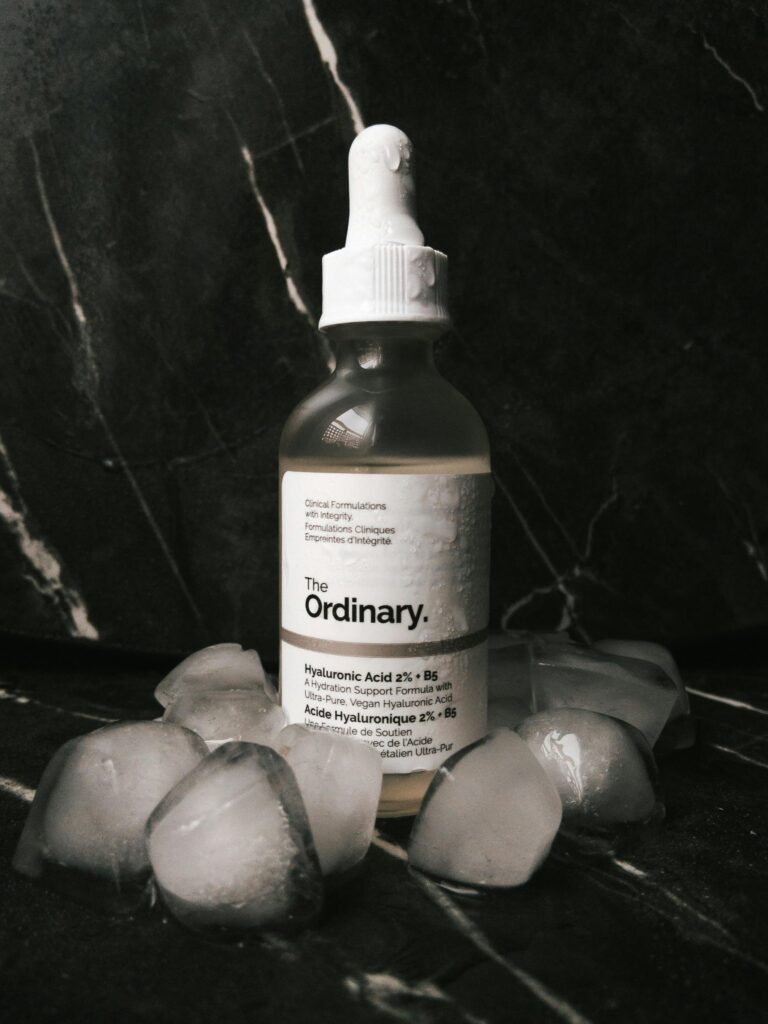
Many of the best-formulated serums and moisturizers on the market contain both precisely because their complementary nature makes them ideal partners. Hyaluronic acid provides the hydration environment that makes niacinamide more effective, and niacinamide’s barrier-strengthening effects help the skin retain the moisture that hyaluronic acid delivers.
In your routine, apply hyaluronic acid first on slightly damp skin — this is critical because hyaluronic acid needs moisture present to draw into the skin. Then apply niacinamide on top. Then moisturizer to seal everything in. Then SPF in the morning.
Which One Should You Choose Based on Your Skin Type?
This is where personalization matters. Generic advice only goes so far — and skin type makes a significant difference in which ingredient to prioritize.
If you have oily or acne prone skin:
Start with niacinamide as your primary serum. The sebum regulation and pore minimization benefits will produce the most visible improvement for your skin. Add a lightweight hyaluronic acid if your skin feels dehydrated — which oily skin frequently is — but niacinamide is the priority.
If you have dry skin:
Start with hyaluronic acid — your skin needs surface hydration urgently. Add niacinamide to address barrier repair which is the underlying cause of your dryness. Over time the niacinamide will help your skin retain the moisture the hyaluronic acid delivers.
If you have combination skin:
Both are equally important. Use niacinamide to control oil in your T-zone and hyaluronic acid to address dryness in your cheeks. Since both can be applied to the whole face this does not require complicated zonal application.
If you have sensitive skin:
Both are among the most gentle effective ingredients available. Start with hyaluronic acid since it produces visible soothing results quickly and is the least likely to cause any reaction. Introduce niacinamide after two weeks when you are confident your skin tolerates the hyaluronic acid well.
If you have normal skin:
You have the most flexibility. Use both for comprehensive skin health — hyaluronic acid maintains your skin’s natural plumpness and niacinamide provides protective benefits that maintain skin quality as you age.
If you are genuinely not sure which skin type you have or which of these ingredients should be your priority, try the free AI skin analysis at yourskingpt.com/skin-analysis. It analyzes your actual skin from a photo, identifies your skin type and concerns, and gives you a specific routine recommendation — including exactly which ingredients your skin needs and in which order. It takes 15 seconds and is completely free.
The Best Products Containing Hyaluronic Acid
The Inkey List Hyaluronic Acid Serum One of the most straightforward and effective hyaluronic acid serums available. It uses three molecular weights of hyaluronic acid — large molecules that sit on the surface, medium molecules that penetrate the upper layers, and smaller molecules that go deeper. This multi-weight approach delivers more comprehensive hydration than single-weight formulas. Under $10 and available at Sephora.
Neutrogena Hydro Boost Hyaluronic Acid Serum A drugstore classic that delivers pharmaceutical-grade hyaluronic acid at an accessible price point. The gel texture makes it ideal for oily and combination skin that wants hydration without any greasiness. Available at Dermstore.
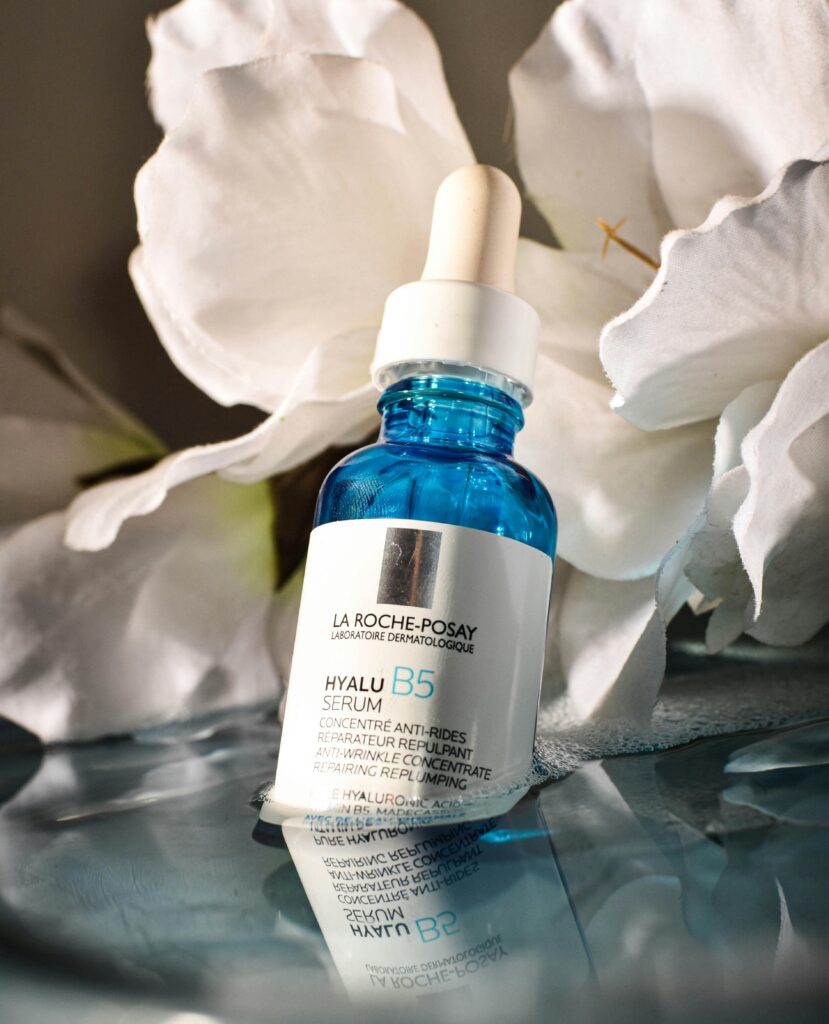
La Roche-Posay Hyalu B5 Serum The most premium option on this list. It combines hyaluronic acid with vitamin B5 — panthenol — which works synergistically to enhance barrier repair alongside the hydration benefits. Particularly good for dry and sensitive skin that needs intensive repair. Available at Dermstore.
The Best Products Containing Niacinamide
The Ordinary Niacinamide 10% + Zinc 1% The product that made niacinamide mainstream and still one of the best formulations available at any price point. The zinc addition specifically targets sebum production making this the top choice for oily and acne prone skin. Under $7 and available at Sephora.
Paula’s Choice 10% Niacinamide Booster A more sophisticated formula that adds antioxidants alongside niacinamide. Better suited to sensitive skin that finds The Ordinary formula slightly irritating. Also works well for mature skin concerned with anti-aging benefits. Available at paulaschoice.com.
CeraVe PM Facial Moisturizing Lotion The best option for people who want niacinamide combined with ceramides in a single moisturizer step. Ideal for dry and combination skin that wants barrier repair and sebum regulation simultaneously without multiple serum steps. Available at Dermstore.
Products That Contain Both
For those who want to simplify their routine the following products combine both ingredients effectively.
Olay Regenerist Micro-Sculpting Serum contains both hyaluronic acid and niacinamide alongside peptides — making it a strong anti-aging option for normal to combination skin that wants multiple benefits in one step. Available at Sephora.
Garnier Bright Complete Vitamin C Serum combines niacinamide with hyaluronic acid and vitamin C — a brightening-focused formula that targets hyperpigmentation while providing hydration. A good choice for dull, uneven skin that needs brightening alongside hydration. Available at Dermstore.
Common Mistakes When Using These Ingredients
Using hyaluronic acid on completely dry skin. This is the most common hyaluronic acid mistake. When applied to dry skin in a dry environment hyaluronic acid can actually pull moisture from the deeper layers of skin to the surface — which sounds beneficial but can leave the deeper layers drier than before. Always apply hyaluronic acid on slightly damp skin and follow immediately with a moisturizer to seal it in.
Expecting niacinamide to work like hyaluronic acid. People who switch from hyaluronic acid to niacinamide sometimes feel disappointed because they do not see the immediate plumping effect they were used to. Niacinamide works over weeks — not hours. It is a long-term investment in skin health, not an immediate cosmetic fix.

Using too high a concentration of niacinamide too quickly. Starting at 10% on sensitive skin can cause temporary flushing for some people. Start at 5% and build up if needed.
Not moisturizing after hyaluronic acid. Hyaluronic acid without a moisturizer on top loses the moisture it has drawn to the surface. The moisturizer acts as a seal — without it the hydration evaporates. Always follow hyaluronic acid with a moisturizer regardless of your skin type.
The Honest Answer to the Question
So — hyaluronic acid or niacinamide?
If you can only choose one right now and your primary concern is dryness, dehydration, or you are completely new to skincare — start with hyaluronic acid. The results are faster, the usage is simpler, and the immediate visible improvement will motivate you to continue building your routine.
If your primary concerns are oily skin, breakouts, dark spots, large pores, or uneven skin tone — start with niacinamide. It addresses the root causes of these concerns rather than masking them, and the long-term results are more significant.
If you can use both — and most people can — use both. Apply hyaluronic acid first on damp skin, follow with niacinamide, seal with moisturizer, finish with SPF in the morning. This combination addresses hydration, barrier health, oil regulation, and long-term skin quality simultaneously. It is one of the most comprehensive and evidence-backed skincare combinations available without a prescription.
For a routine built specifically around your skin type and concerns rather than generic advice, try the free AI skin analysis at yourskingpt.com/skin-analysis. Upload a selfie, answer five questions about your skin and lifestyle, and get a personalized routine that tells you exactly which products and ingredients your skin specifically needs.
You might also find our complete guide on skincare routine for oily skin useful if oil regulation is your primary concern — or our post on niacinamide benefits for skin if you want to go deeper on what niacinamide can do for your specific concerns.
This article is for informational purposes only and does not constitute medical advice. Always consult a qualified dermatologist for persistent skin concerns.