
Here is a situation that plays out in bathroom mirrors all over the world every single morning.
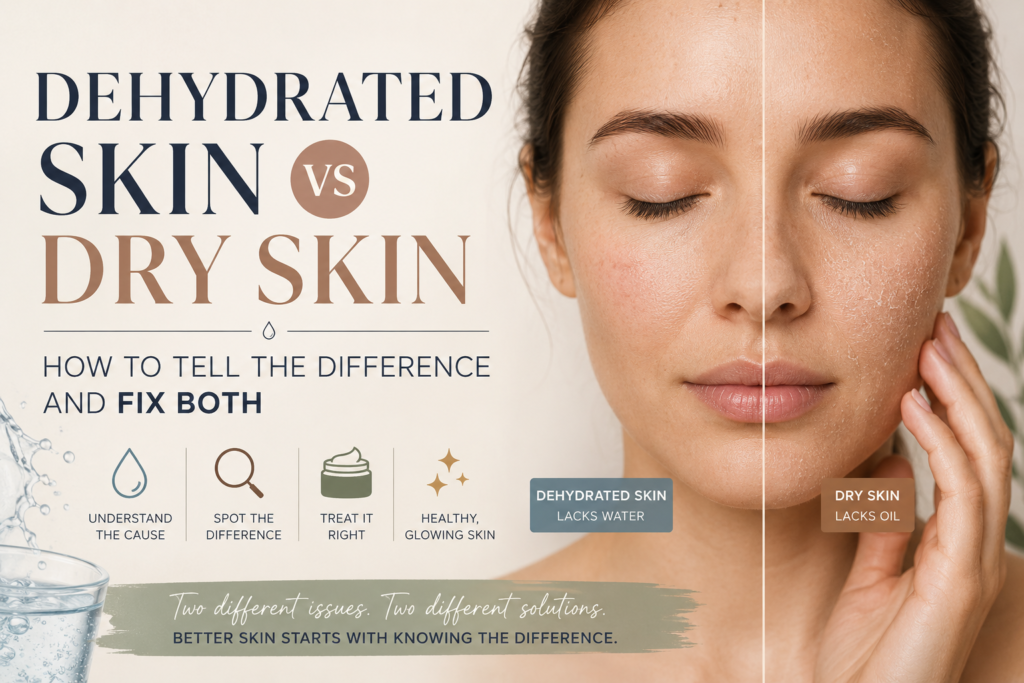
Someone looks at their skin and sees tightness. Dullness. Fine lines that seem worse than they should be for their age. Maybe some flaking around the nose. They have been moisturizing religiously. They have tried three different moisturizers in the last six months. None of them fixed the problem for more than a few hours. They conclude they have dry skin and need a richer cream.
They buy the richest cream they can find. Their skin still feels tight by afternoon. They spend more money. The problem persists.
What most of these people actually have is not dry skin. It is dehydrated skin. And the reason the rich creams are not working is because dry skin and dehydrated skin are fundamentally different conditions that require fundamentally different treatments. Using a dry skin moisturizer on dehydrated skin is like taking a painkiller for an infection — it addresses the symptom briefly but does nothing about the actual cause.
The confusion between dehydrated skin vs dry skin is one of the most expensive mistakes in skincare. People waste years and hundreds of dollars treating the wrong thing. This guide explains exactly what each condition is, how to tell them apart, and precisely what each one needs to actually get better.
Why This Distinction Matters More Than Most People Realize
The difference between dry skin and dehydrated skin is not a technicality. It is a biological distinction that completely changes which ingredients work and which ones do not.
Dry skin is a skin type. It is a genetic predisposition to produce less sebum than normal. Sebum — the natural oil your skin produces — is not just what makes oily skin shine. It is an essential component of the barrier lipid layer that keeps moisture inside your skin. When you do not produce enough of it your skin lacks the oil component of that barrier and loses moisture more easily than normal skin does. The fix for dry skin involves replenishing the lipids — the oils and waxy substances — that your skin is not producing in adequate quantities on its own.
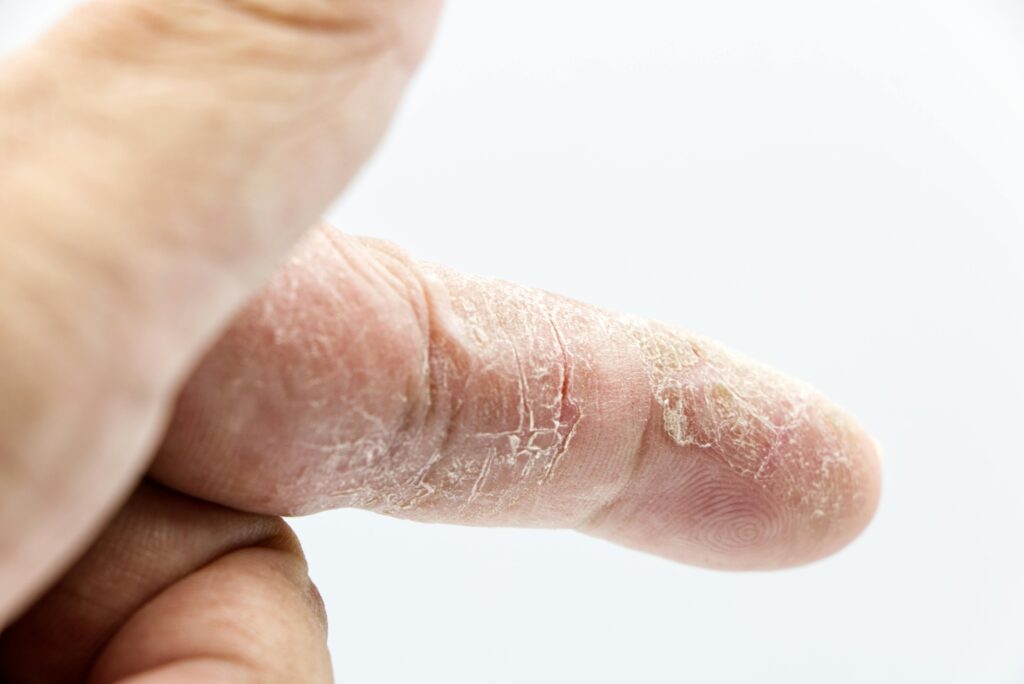
Dehydrated skin is a skin condition not a skin type. It is a temporary state that any skin type can experience including oily skin. It occurs when the water content of the skin is depleted — either because external factors are stripping water from the skin faster than it can be replaced or because the skin barrier is compromised enough that water is escaping more rapidly than it should. The fix for dehydrated skin involves replenishing water and preventing it from escaping — which requires completely different ingredients to the ones that fix dry skin.
This distinction explains something that confuses a lot of people: why oily skin can feel tight and look dull. Oily skin produces excess oil but can simultaneously be severely dehydrated if the water content of the skin cells is depleted. The oil on the surface does nothing to maintain water inside the cells. Someone with oily dehydrated skin who applies a rich lipid-heavy moisturizer designed for dry skin often makes their skin worse — more congested, more prone to breakouts, and still dehydrated because they added oil to a skin that needed water not oil.
What Is Dry Skin — The Complete Picture
Dry skin as a skin type is characterized by chronically insufficient sebum production. The sebaceous glands simply do not produce enough oil to maintain the lipid component of the skin barrier at a healthy level.
This has several consequences that follow logically from the mechanism.
The skin barrier — which requires a specific ratio of ceramides, cholesterol, and free fatty acids to function properly — is structurally compromised because the sebum that would normally contribute to this lipid layer is absent. This means dry skin loses water more easily than normal skin does — not because it lacks water specifically but because it lacks the oil barrier that prevents water from escaping.
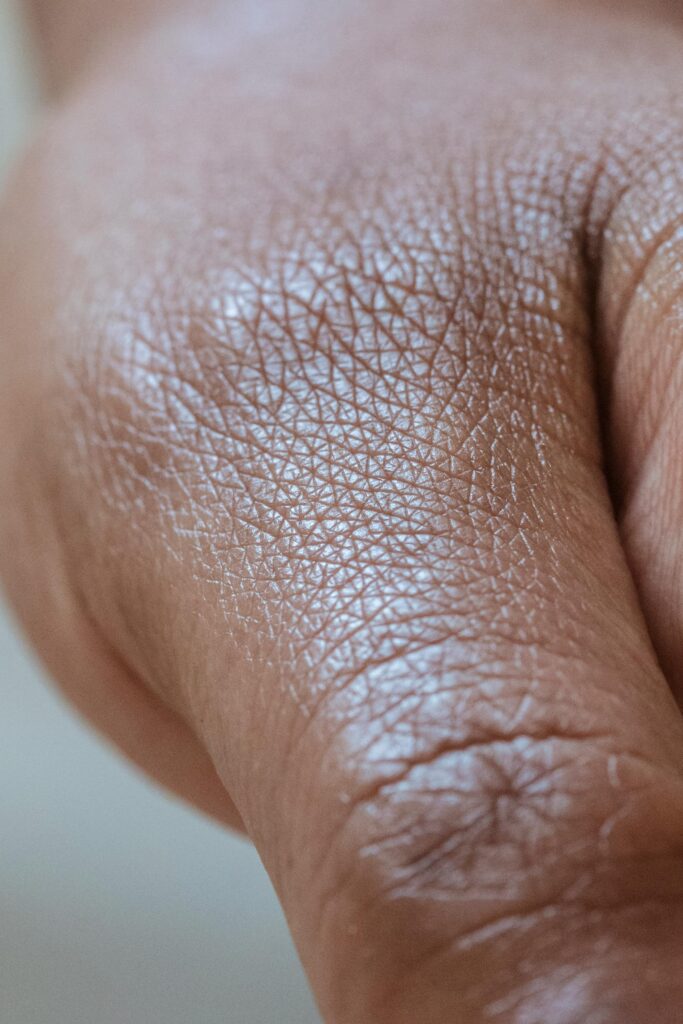
Dry skin has a characteristic set of symptoms that distinguish it from dehydrated skin when you know what to look for. It feels rough and sometimes papery to the touch — not just tight. It may have visible flaking or scaling particularly around the nose, eyebrows, and hairline. It tends to look dull in a specific way — not the grey flat dullness of dehydrated skin but the matte, slightly chalky dullness of skin that lacks surface oil. It does not produce shine even after a full day without any skincare. It tends to feel worse in cold, dry weather and better in humid conditions because humidity reduces the rate at which moisture escapes through the barrier.
Dry skin as a type is largely genetic. If you have had it your whole life, if family members have it, if you have eczema or psoriasis — these are all indicators that your skin type is genuinely dry rather than situationally dehydrated. Dry skin does not go away when you drink more water or change your diet. It requires ongoing management through lipid-replenishing skincare.
According to the American Academy of Dermatology, dry skin affects approximately 50% of adults at some point in their lives and is significantly more common in cold climates, in older adults whose sebum production naturally declines, and in people with genetic conditions affecting barrier lipid synthesis.
What Is Dehydrated Skin — The Complete Picture
Dehydrated skin is the state of having insufficient water content in the skin cells — specifically in the stratum corneum, the outermost layer of skin that you can see and touch.
Unlike dry skin which is about lipid deficiency, dehydration is specifically about water deficiency. The skin cells themselves — which are approximately 70% water when optimally hydrated — have lost water content and as a result cannot perform their functions at full capacity. They look slightly sunken. They do not reflect light evenly. The spaces between cells widen slightly as cells lose their plumpness — creating the fine surface texture that makes fine lines look more prominent and gives skin that papery, slightly crepe-like quality when it is severely dehydrated.
Dehydrated skin can affect any skin type. This is the fact that surprises most people.
Oily dehydrated skin is extremely common — possibly the most common misidentified skin condition in the beauty industry. The skin produces excess oil to try to compensate for the loss of water and barrier function, creating a confusing presentation of oily T-zone with simultaneous fine surface texture, dullness, and tightness. Many people who have spent years managing what they thought was purely oily skin are actually managing oily dehydrated skin — and the oil-control products they use to manage the oiliness are often making the dehydration worse.
Combination dehydrated skin and even normal dehydrated skin are common particularly in winter, in air-conditioned environments, and in periods of high stress or illness.
The causes of skin dehydration are varied and often multiple. Over-cleansing or using high-pH cleansers strips the barrier and allows water to escape more rapidly. Spending time in air-conditioned or centrally heated environments which remove moisture from the air and therefore from the skin. UV exposure which damages skin cells and impairs their water-retention capacity. Insufficient water intake providing the systemic hydration that the skin draws on. Alcohol and caffeine consumption which have mild diuretic effects. Certain skincare ingredients — alcohol-based toners, harsh acids, over-use of retinol — that compromise barrier function and accelerate water loss. And interestingly over-moisturizing with products that are too occlusive without the hydrating ingredients underneath, which creates a seal over skin that is not actually hydrated.
Research published on PubMed demonstrates that transepidermal water loss — the rate at which water escapes through the skin surface — is the primary measurement of skin hydration status and that elevated TEWL correlates with all the visible and sensory symptoms associated with skin dehydration.
How to Tell the Difference — The Diagnostic Tests
This is where the guide gets practically useful. Several simple at-home tests distinguish dry skin from dehydrated skin with reasonable accuracy.
The pinch test
Gently pinch a small amount of skin on your cheek or the back of your hand. Hold it for two seconds and release.
Hydrated skin snaps back to its original position immediately. Dehydrated skin takes a moment to return — sometimes a full second or two — and may show fine lines across the pinched area that fade after a few seconds. This delayed return is caused by the reduced water content in skin cells which makes them less plump and elastic.
This test specifically identifies dehydration — not dryness. Dry skin may or may not show the delayed return depending on whether it is also dehydrated.
The bare face observation test
Wash your face with a gentle cleanser and apply nothing afterward. Wait one hour in normal indoor conditions. Then observe your skin carefully in natural light.
Dry skin after one hour will feel rough and tight. It will look dull in a matte way. There will be no shine anywhere on the face including the T-zone. It may show some visible flaking. It feels uncomfortable in a persistent, whole-face way.
Dehydrated skin after one hour will also feel tight but the tightness has a different quality — more like a film over the skin surface than the rough, papery tightness of dry skin. Dehydrated skin often shows a very fine surface texture in certain light — tiny lines across the surface that become more visible when you smile or move your face. The dullness of dehydrated skin has a grey or flat quality rather than the matte chalky quality of dry skin.
The fine line test
Look closely at the skin surface — particularly under your eyes and across your cheeks — when your face is in its natural resting state without any product on it.
Dehydrated skin shows very fine surface lines — not wrinkles, not expression lines, but a fine network of tiny lines across the skin surface that look almost like crinkled paper when the skin is slightly compressed. These are not permanent — they fill in and disappear with proper hydration. These dehydration lines are absent in genuinely dry skin that is simply lipid-deficient but not water-depleted.
The history test
Ask yourself honestly: has your skin always been like this or did it develop?
Dry skin as a skin type is essentially constant throughout your life with some seasonal variation. If you have had rough, tight, dull skin your entire adult life regardless of your routine or season it is likely a genuine skin type.
Dehydrated skin develops. It gets worse in winter and in air-conditioned environments. It appears after periods of illness, stress, or poor diet. It worsens when you add new active ingredients to your routine. It improves relatively quickly — within days to a week — when you drink more water and apply a well-formulated hydrating routine. If your skin tightness and dullness has come and gone throughout your life and responds noticeably to hydration changes it is almost certainly dehydration rather than a fixed skin type.
The skin type overlay test
If your skin produces noticeable oil anywhere on your face by midday — particularly the forehead and nose — your skin type is oily or combination. Not dry. Dry skin does not produce midday shine anywhere. If your oily or combination skin simultaneously shows tightness, fine surface texture, or dullness you are dealing with oily or combination dehydrated skin — not dry skin.
How to Fix Dry Skin — The Right Approach
Dry skin needs lipids. The treatment strategy for genuinely dry skin focuses on replenishing the oils and waxy substances that the skin is not producing adequately and creating an occlusive layer that reduces the rate of water loss through the compromised barrier.
The right cleanser for dry skin
High-pH foaming cleansers are the worst possible choice for dry skin — they strip the limited surface oils that dry skin does have. Use a cream or oil cleanser that cleans without removing barrier lipids. The La Roche-Posay Toleriane Hydrating Gentle Cleanser is the most consistently recommended gentle cleanser for dry skin — it contains glycerin, ceramides, and niacinamide in a creamy formula that cleanses without any barrier disruption. Available at Dermstore.
The right moisturizer for dry skin
Dry skin needs a rich cream — not a lotion, not a gel, not a serum. The cream texture provides the occlusive layer that slows water loss while delivering the ceramides, cholesterol, and fatty acids that the dry skin barrier needs.
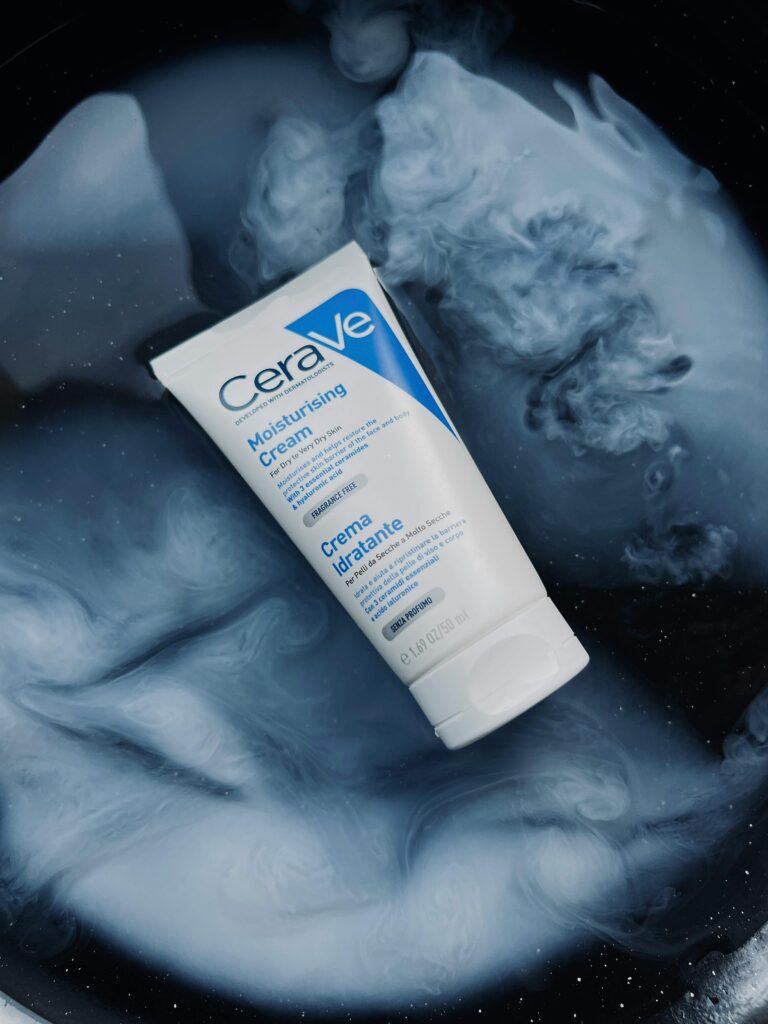
The CeraVe Moisturizing Cream is the gold standard recommendation for dry skin — three ceramides, cholesterol, hyaluronic acid, and an MVE delivery technology that releases ingredients gradually into the skin throughout the day rather than all at once on application. Available at Dermstore.
For very dry skin the First Aid Beauty Ultra Repair Cream adds colloidal oatmeal alongside ceramides and shea butter for intensive barrier repair. Available at Sephora.
The right facial oil for dry skin
A facial oil applied as the final step in the evening routine provides an additional occlusive layer and delivers lipid-soluble nutrients directly to the barrier. For dry skin specifically oils rich in linoleic acid — rosehip, sea buckthorn, marula — support ceramide synthesis and barrier repair more effectively than oleic-acid-heavy oils like olive or coconut.
The Biossance 100% Squalane Oil is a lightweight, non-comedogenic option that provides occlusion without any of the comedogenic risks of heavier oils. Available at Sephora.
The ingredients dry skin needs most:
Ceramides in the forms ceramide NP, AP, and EOP replenish the structural lipids of the barrier directly. Shea butter and plant-based butters provide occlusion and additional lipids. Squalane mimics the skin’s own sebum and provides lightweight lipid replenishment. Fatty acids including linoleic acid support barrier lipid synthesis. Glycerin is a humectant that also supports dry skin by drawing additional moisture to the surface.
What dry skin should avoid:
Foaming cleansers with sulfates. Alcohol-based toners. Over-exfoliation — dry skin needs gentler and less frequent exfoliation than oily skin. Fragrance which causes contact dermatitis more readily on dry sensitized skin. Retinol introduced too quickly without adequate moisturizer buffering.
How to Fix Dehydrated Skin — The Right Approach
Dehydrated skin needs water — delivered to the skin cells and retained there. The treatment strategy for dehydrated skin focuses on replenishing water content and sealing it in. This is fundamentally different from the lipid-replenishment strategy for dry skin.
The most important principle for fixing dehydrated skin:
Humectants must always be followed immediately by an occlusive or moisturizer. This is the single most important thing to understand about treating dehydrated skin and the mistake most people make.
Humectants — hyaluronic acid, glycerin, aloe vera — work by drawing water into the skin. Applied to slightly damp skin they pull moisture from the environment and from deeper skin layers up to the surface. This is exactly what you want. But if you apply a humectant and then do nothing on top of it the moisture it has drawn to the surface evaporates into the air — particularly in dry indoor environments — leaving the skin even drier than before.
Apply humectants to damp skin. Follow immediately with a moisturizer to seal. This sequence — humectant then seal — is the foundation of effective dehydrated skin treatment.
The right products for dehydrated skin
Hyaluronic acid serum is the most effective humectant available. Apply to slightly damp skin — the dampness is not optional, it is essential — and follow within thirty seconds with your moisturizer. The Neutrogena Hydro Boost Hydrating Serum delivers pharmaceutical-grade hyaluronic acid in a lightweight formula that works for every skin type including oily dehydrated skin. Available at Dermstore.
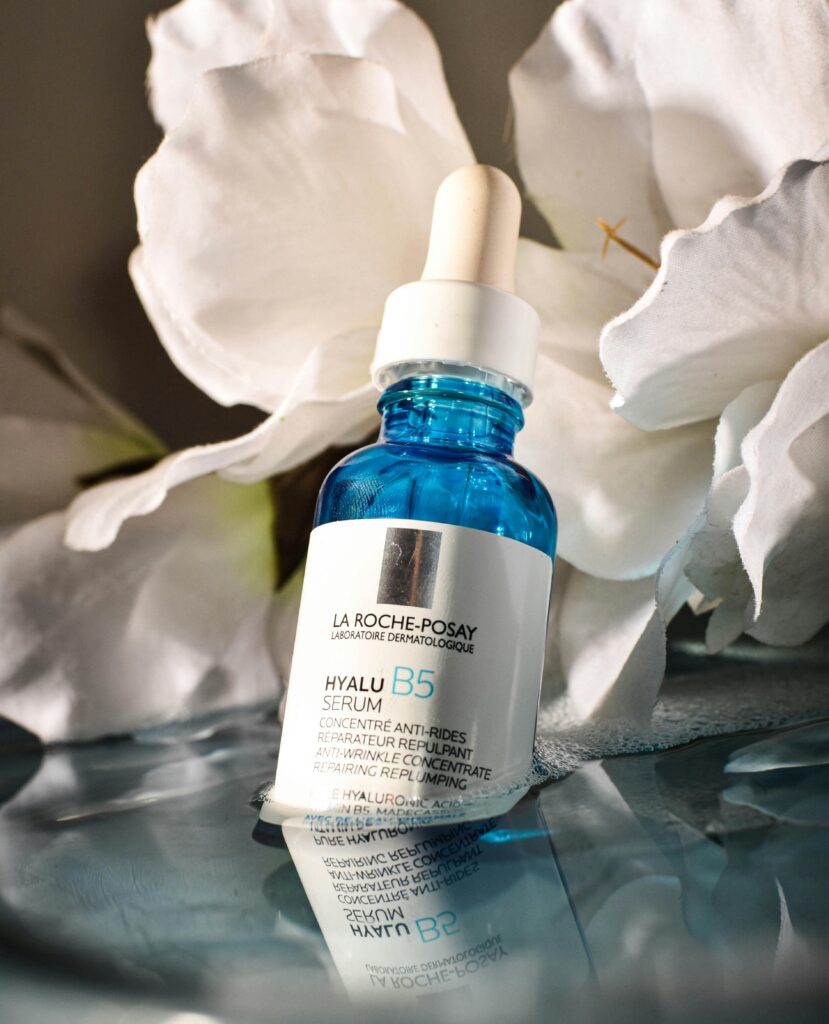
The Inkey List Hyaluronic Acid Serum uses three molecular weights of hyaluronic acid — large molecules that sit on the surface, medium molecules in the upper layers, and smaller molecules that penetrate more deeply — for comprehensive multi-layer hydration. Available at Sephora.
For oily dehydrated skin a gel moisturizer provides the sealing layer needed without adding surface oil. The Neutrogena Hydro Boost Water Gel is the most widely recommended option — oil-free, gel-based, non-comedogenic, and genuinely hydrating through its hyaluronic acid base. Available at Dermstore.
For normal to combination dehydrated skin the Belif The True Cream Aqua Bomb delivers an intensive surge of hydration in a gel-cream texture that works well across skin types. Available at Sephora.
The ingredients dehydrated skin needs most:
Hyaluronic acid in multiple molecular weights for comprehensive water delivery across skin layers. Glycerin — one of the most effective and underrated humectants available, present in almost every effective hydrating formula. Beta glucan — a lesser-known humectant that penetrates deeply and soothes simultaneously. Aloe vera — a gentle humectant with additional anti-inflammatory properties. Panthenol — vitamin B5 — which both draws water into the skin and supports the barrier that keeps it there.
Lifestyle changes that fix dehydrated skin faster than any product:
Drinking eight or more glasses of water daily provides the systemic hydration that the skin draws on. Reducing alcohol and caffeine consumption — both have mild diuretic effects that contribute to systemic dehydration. Using a humidifier in centrally heated or air-conditioned rooms adds moisture back to the air and significantly reduces the rate of transepidermal water loss. Switching from hot to lukewarm water for face washing. Taking shorter showers in cooler water.
According to Healthline, lifestyle hydration factors including daily water intake and environmental humidity have measurable effects on skin water content — with adequate hydration producing visible improvements in skin plumpness and surface texture within two to three weeks.
The Conditions That Look Like Both — Understanding Overlap
Here is where it gets genuinely complicated — and where most skincare content oversimplifies.
Many people have both dry skin type and dehydrated skin simultaneously. Dry skin has a compromised barrier that allows water to escape more easily — so dry skin is inherently more prone to dehydration than normal skin. The result is someone who needs both lipid replenishment for their dry skin type and water replenishment for their dehydrated condition.
For this combination the correct treatment layering is: hydrating toner or hyaluronic acid serum on damp skin, followed immediately by a rich ceramide cream to simultaneously seal the hydration and replenish the lipids. The sequence addresses both needs in one layered application.
Sensitized skin — barrier-damaged skin as discussed in our guide on how to repair skin barrier — also presents with dehydration symptoms because a damaged barrier cannot retain water normally. People often misidentify barrier damage as dehydration and treat it with hydrating products alone — which helps the symptom without addressing the structural barrier issue. If dehydration symptoms do not improve meaningfully after two weeks of proper hydrating treatment the barrier rather than water deficiency may be the primary issue.
Mature skin naturally presents with both dry skin characteristics and dehydration simultaneously. Sebum production declines with age — making skin more lipid-deficient. Natural hyaluronic acid production also declines — making skin less able to retain water at the cellular level. Mature skin care must address both the lipid component through rich ceramide-containing moisturizers and the water component through humectant serums layered underneath.
Building Your Routine Based on Your Diagnosis
Once you have identified whether you are dealing with dry skin, dehydrated skin, or both the routine becomes logical rather than guesswork.
Routine for dry skin:
Morning — gentle cream cleanser, lightweight hyaluronic acid serum on damp skin, rich ceramide cream moisturizer, mineral SPF 50. Evening — gentle cream cleanser or cleansing balm, hyaluronic acid serum on damp skin, rich ceramide cream or ointment, facial oil as the final occlusive seal.
Routine for oily dehydrated skin:
Morning — gentle foaming or gel cleanser, hyaluronic acid serum on damp skin immediately followed by lightweight gel moisturizer, oil-free SPF. Evening — double cleanse with oil cleanser then gel cleanser, hyaluronic acid serum on damp skin, lightweight gel moisturizer. No facial oil needed on oily dehydrated skin.
Routine for combination dehydrated skin:
Morning — gentle gel cleanser, hyaluronic acid serum on damp skin, gel-cream moisturizer, SPF. Evening — double cleanse, hyaluronic acid serum on damp skin, gel-cream moisturizer, optional sleeping mask twice per week.
Routine for both dry skin and dehydrated skin simultaneously:
Morning — cream cleanser, hyaluronic acid serum on damp skin, ceramide-rich cream immediately on top, SPF. Evening — cleansing balm then cream cleanser, hyaluronic acid serum on damp skin, ceramide cream, facial oil on top, sleeping mask two to three nights per week.
If you are still uncertain about your specific skin condition and what routine is right for your individual skin the free AI skin analysis at yourskingpt.com/skin-analysis analyzes your actual skin from a selfie, combines it with your lifestyle answers about water intake and other factors, and tells you precisely what your skin needs — including whether dehydration, dryness, or barrier damage is your primary concern. Free, in fifteen seconds, no account required.
You might also find our complete guides on how to repair skin barrier and skincare routine for beginners useful for building the right foundation around your diagnosis.
The Products That Work for Both Conditions
For people who are not certain whether they are dealing with dry or dehydrated skin and want to address both simultaneously, several products are formulated to work across both conditions by combining humectant hydration with lipid barrier support.
The CeraVe Moisturizing Cream works for both because it combines hyaluronic acid — addressing dehydration — with three ceramides and cholesterol — addressing dry skin barrier lipid deficiency. It is the rare moisturizer that genuinely targets both mechanisms simultaneously. Available at Dermstore.
The La Roche-Posay Toleriane Double Repair Face Moisturizer combines ceramides and niacinamide for barrier repair with glycerin for humectant hydration in a formula gentle enough for even the most reactive skin. Available at Dermstore.
The Neutrogena Hydro Boost Gel Cream combines hyaluronic acid with olive extract — providing both the water-drawing humectant and the lipid-based occlusion in a formula that works well for normal to combination skin dealing with either or both conditions. Available at Dermstore.
Frequently Asked Questions
Can oily skin be dehydrated? Yes — this is one of the most common and most consequential skincare misunderstandings. Oily skin produces excess sebum but sebum is oil not water. Skin cells can be severely depleted of water content while still producing excess surface oil simultaneously. Oily dehydrated skin is extremely common particularly among people who use oil-control products that strip the barrier and accelerate water loss. If your oily skin shows fine surface texture, feels tight despite the oiliness, or looks dull and flat rather than genuinely glowing it is likely dehydrated.
Why does my skin feel tight even after moisturizing? Persistent tightness despite moisturizing usually indicates one of three things. You are using the wrong type of moisturizer for your condition — a lipid-heavy cream on dehydrated skin addresses the wrong mechanism. You are applying your moisturizer incorrectly — without a humectant serum underneath on slightly damp skin the moisturizer cannot do its full job. Or your skin barrier is compromised to the point where normal moisturizers cannot seal hydration in effectively and barrier repair is needed before standard hydration products can work.
Does drinking more water fix dehydrated skin? Partially. Adequate water intake is a significant factor in skin hydration — consistently under-hydrated people have measurably lower skin water content than adequately hydrated people. But drinking more water alone without addressing the topical barrier issues that are allowing water to escape is usually insufficient to fully resolve dehydrated skin. Both internal hydration and topical humectant-plus-seal treatment together produce the fastest and most complete improvement.
How long does it take to fix dehydrated skin? Visible improvement in dehydrated skin typically appears within three to five days of correct humectant-plus-seal treatment. Meaningful resolution of the condition — skin that maintains its hydration throughout the day without tightness returning — takes two to four weeks of consistent correct treatment. Unlike dry skin which requires ongoing management, dehydrated skin can be genuinely resolved once the contributing factors are addressed.
How long does it take to improve dry skin? Dry skin as a skin type cannot be permanently resolved — it requires ongoing management because the underlying sebum deficiency is genetic. However the visible and sensory symptoms of dry skin — tightness, roughness, flaking — respond to appropriate lipid-replenishing treatment within one to two weeks and can be very effectively managed with a consistent ceramide-based routine. Thinking of dry skin management as a lifestyle rather than a treatment that has an endpoint produces better long-term outcomes.
Is my skin dry or dehydrated if it only gets worse in winter? Seasonal worsening that improves in summer or in humid conditions suggests dehydration rather than a fixed dry skin type. Dry skin does vary seasonally — cold weather accelerates moisture loss — but it is present year-round. If your skin is genuinely comfortable in summer and only becomes tight and dull in winter the condition is almost certainly situational dehydration caused by the combination of cold air and indoor heating rather than a fixed skin type.
The Bottom Line
Dry skin and dehydrated skin feel similar — tight, dull, uncomfortable — but they are caused by completely different mechanisms and fixed by completely different approaches. Using dry skin treatments on dehydrated skin or dehydrated skin treatments on dry skin produces partial relief at best and sometimes makes the actual condition worse.
Dry skin lacks oil. It needs lipids — ceramides, fatty acids, and occlusive ingredients that replenish the barrier and slow moisture escape. Dehydrated skin lacks water. It needs humectants — hyaluronic acid and glycerin on slightly damp skin, sealed immediately with a moisturizer to keep the water from evaporating.
Take the pinch test. Consider your history. Observe whether you produce any shine by midday. Identify which condition — or combination of conditions — you are actually dealing with. Then treat accordingly.
The improvement in skin that comes from finally treating the right condition with the right products is one of the most immediately satisfying experiences in skincare. Skin that has been tight and dull for months can look genuinely different within a week of correct treatment. The diagnosis is the work. The fix follows naturally.
The free AI skin analysis at yourskingpt.com/skin-analysis analyzes your actual skin and identifies whether dryness, dehydration, or barrier damage is your primary concern — saving you the guesswork and the wasted product purchases that come from treating the wrong condition. Free in fifteen seconds with no account required.
This article is for informational purposes only and does not constitute medical advice. Always consult a qualified dermatologist for persistent skin concerns or conditions.