
Everyone starts somewhere.
Maybe you have spent your entire adult life washing your face with whatever soap was in the shower and calling it a day. Maybe you have watched enough skincare videos to feel overwhelmed but not enough to feel informed. Maybe someone told you that you need a toner and a serum and an essence and a sleeping mask and a vitamin C and a retinol and you closed the tab and decided skincare was not for you.

All of that is completely understandable. The skincare industry is genuinely confusing — not by accident but by design. More confusion means more products sold. More products sold means more revenue. The industry has a financial incentive to make skincare feel complicated because complicated skincare sells more than a simple skincare routine for beginners.
Here is the truth that the industry does not particularly want you to know: a genuinely effective skincare routine for beginners requires three products. Not fifteen. Not seven. Three. A cleanser, a moisturizer, and a sunscreen. That is the complete foundation. Everything else is optional — genuinely useful in some cases, completely unnecessary in others.
This guide starts exactly where you are — knowing nothing — and builds from there. No assumptions about what you already know. No unnecessary complexity. Just the honest, practical information you need to start taking care of your skin in a way that produces real results without turning your bathroom into a laboratory.
Why Skincare Actually Matters
Before getting into products it is worth spending a moment on why skincare matters at all — because if you understand the why, the what becomes much easier to remember and stick to.

Your skin is your largest organ. It is your first line of defense against environmental damage, bacteria, UV radiation, and the pollution that accumulates on every surface of a modern city. It regulates your body temperature. It synthesizes vitamin D. It is the first thing other people see when they look at you and — more importantly — it is something you see in the mirror every single day.
Healthy skin does not require perfection. It does not require an expensive routine or a dermatologist on speed dial. It requires consistency — showing up for your skin every day with a few simple steps that keep it clean, hydrated, and protected.
The habits you build in your twenties determine how your skin looks in your forties. This is not a scare tactic — it is simple biology. UV damage, dehydration, and barrier neglect accumulate over years. The people who start a basic skincare routine early and maintain it consistently age measurably better than those who do not. Starting today — wherever you are — is always the right time.
Understanding Your Skin Type — The First Step
Before you buy a single product you need to know your skin type. Not because skincare is impossibly different across skin types but because the wrong products for your skin type produce the wrong results — and the right products for your skin type produce significantly better results for the same effort.
There are four main skin types. Oily skin produces excess sebum and tends to look shiny by midday with enlarged pores and a tendency toward breakouts. Dry skin produces less oil than it needs, feels tight after cleansing, and may have rough or flaky patches particularly around the nose and forehead. Combination skin has an oily T-zone — forehead, nose, and chin — with normal or slightly dry cheeks. Normal skin is the lucky minority — well-balanced, comfortable, and relatively low-maintenance.
Sensitive skin is not a separate type but a characteristic that can overlay any of the four types above. Sensitive skin reacts to products, environmental changes, and sometimes even water with redness, stinging, or irritation.
The simplest way to identify your skin type at home is the bare face test. Wash your face with a gentle cleanser and do not apply anything afterward. Wait one hour. Then observe — if your whole face looks shiny your skin is oily. If it feels tight and looks dull it is dry. If your forehead and nose are shiny but your cheeks feel normal or dry it is combination. If everything feels balanced and comfortable it is normal.
If you want a more accurate assessment than a simple observation test the free AI skin analysis at yourskingpt.com/skin-analysis analyzes your actual skin from a selfie, combines it with your lifestyle information, and gives you a precise skin type identification alongside a complete beginner routine in fifteen seconds — completely free with no account required.
Understanding your skin type before buying products saves you from the most expensive and frustrating beginner mistake — buying products that are wrong for your skin and assuming skincare just does not work for you when the real problem was the product selection.
The Three Products Every Beginner Needs
These three products form the complete foundation of any skincare routine. Master these before adding anything else. Use them consistently for eight weeks before deciding whether to build further.
Product 1 — Cleanser
A cleanser removes the accumulated sebum, pollution, sweat, and product residue that builds up on your skin throughout the day and overnight. It is the reset button that prepares your skin to receive everything applied afterward.

The most important thing to understand about cleansers is that they should not leave your skin feeling tight, squeaky, or stripped after washing. That tight, clean feeling that some cleansers produce is not your skin being clean — it is your skin’s acid mantle being disrupted. The acid mantle is the slightly acidic protective surface layer that keeps bacteria out and moisture in. A good cleanser cleans without disturbing it.
For beginners choosing a cleanser based on skin type makes the decision simple.
Oily and combination skin does well with a gentle foaming or gel cleanser that removes excess sebum without stripping. The CeraVe Foaming Facial Cleanser contains ceramides and hyaluronic acid in a foam formula that leaves skin genuinely clean without the tightness associated with harsh cleansers. Under $15 and available at Dermstore.
Dry and sensitive skin benefits from a cream or milky cleanser that cleans gently without removing barrier lipids. The La Roche-Posay Toleriane Hydrating Gentle Cleanser is a creamy formula with prebiotic thermal water that leaves dry and sensitive skin comfortable and hydrated after washing. Available at Dermstore.
Normal skin can use either formula depending on preference. The CeraVe Hydrating Facial Cleanser works for normal skin that wants a gentle cream cleanser experience. Available at Dermstore.
Use your cleanser morning and evening. In the morning it removes overnight sebum and sweat. In the evening it removes the day’s accumulation of SPF, pollution, makeup, and oxidized oil. Wash with lukewarm water — hot water disrupts barrier lipids and increases moisture loss. Pat dry gently with a clean towel rather than rubbing.
Product 2 — Moisturizer
Every skin type needs moisturizer. This includes oily skin — possibly especially oily skin. This is the misconception that causes more skincare problems than almost any other single piece of bad advice.
When skin lacks moisture — regardless of how much oil it produces — it responds by producing more oil. Skipping moisturizer on oily skin does not reduce oiliness. It increases it. Dehydrated oily skin produces excess sebum to compensate for the lack of water — making you oilier and more breakout-prone than a well-moisturized routine would ever cause.
A moisturizer does two things simultaneously. It delivers hydrating ingredients to the skin surface — hyaluronic acid, glycerin, aloe — that attract and hold water. And it creates a light barrier that slows the evaporation of that water from the skin surface. The combination of hydration delivery and moisture retention is what makes a moisturizer different from simply splashing water on your face.
For beginners choosing the right texture matters more than choosing the right ingredients — because the right texture is what makes a moisturizer feel appropriate to use every day rather than something you skip because it feels heavy or greasy.
Oily and combination skin needs a gel or gel-cream moisturizer — lightweight, oil-free, absorbs quickly, leaves no greasiness. The Neutrogena Hydro Boost Water Gel delivers genuine hydration through hyaluronic acid in a gel texture that absorbs within sixty seconds. Available at Dermstore.
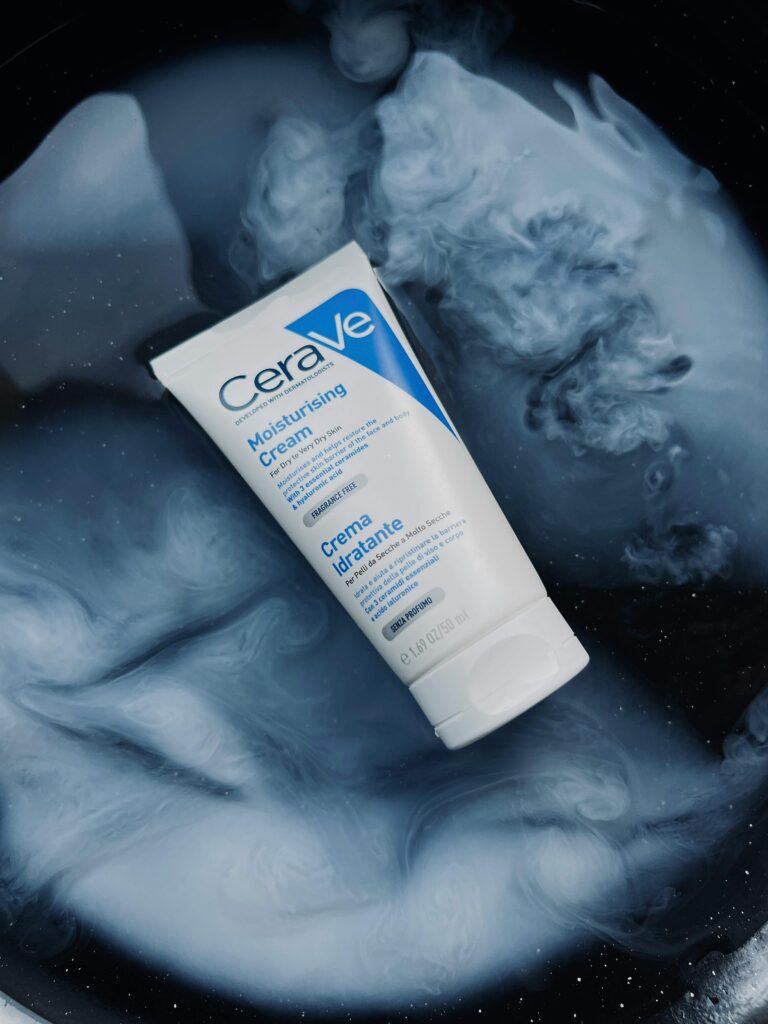
Dry skin needs a cream or lotion moisturizer — richer, more occlusive, designed to address the moisture retention issues that dry skin has. The CeraVe Moisturizing Cream contains three essential ceramides and hyaluronic acid in a formula developed with dermatologists specifically for dry and barrier-compromised skin. Available at Dermstore.
Sensitive skin benefits from fragrance-free formulas with minimal ingredients. The Vanicream Moisturizing Cream contains zero potential irritants — no fragrance, no dyes, no lanolin, no formaldehyde releasers. Available at Dermstore.
Normal skin has the most flexibility — almost any well-formulated moisturizer works. The CeraVe Daily Moisturizing Lotion is a light, versatile option that suits normal skin in most climates. Available at Dermstore.
Apply moisturizer after cleansing while your skin is still slightly damp. The residual moisture helps hydrating ingredients absorb more effectively. Apply a small amount — a pea to dime-sized amount for the whole face — and press it gently in rather than rubbing.
Product 3 — Sunscreen
This is the most important product in your entire skincare routine. More important than any serum. More impactful than any treatment. More consequential for long-term skin health than everything else combined.
According to the American Academy of Dermatology, up to 90% of visible skin ageing — the dark spots, the fine lines, the loss of firmness, the uneven tone that makes skin look older than it should — is caused by cumulative UV exposure rather than chronological ageing. Nine in ten signs of skin ageing are preventable with consistent daily SPF use.

UV damage is cumulative and invisible. You do not see it happening in real time. You see it ten years later as hyperpigmentation, broken capillaries, and collagen loss that no amount of skincare can reverse. The single most impactful decision you make for your future skin today is putting on sunscreen before you go outside.
SPF 30 is the minimum. SPF 50 is preferable. Broad-spectrum means protection against both UVA — the ageing rays — and UVB — the burning rays. Apply it as the absolute last step in your morning routine every day including cloudy days, including winter days, including days when you think you will be inside. UV radiation penetrates windows and causes the same cumulative damage regardless of whether you can feel it.
For oily and acne prone skin the La Roche-Posay Anthelios Clear Skin SPF 60 is a matte-finish formula specifically formulated not to cause breakouts. Available at Dermstore.
For normal to dry skin the EltaMD UV Clear SPF 46 is a lightweight, elegant formula that works beautifully as both SPF and a smooth base under makeup. Available at Dermstore.
For combination skin that wants the most cosmetically elegant lightweight option the Beauty of Joseon Relief Sun SPF 50+ absorbs like a serum and leaves no white cast or shine. Available at Sephora.
Your Complete Beginner Routine — Morning and Evening
With those three products you have everything you need for a complete, effective skincare routine. Here is exactly how to use them.
Morning routine — 5 minutes:
Start with your cleanser. Wet your face with lukewarm water, apply a small amount of cleanser, massage gently for thirty seconds, rinse thoroughly, pat dry.
Apply your moisturizer to slightly damp skin. A dime-sized amount pressed gently into the face and neck. Wait sixty seconds for it to absorb.
Apply your sunscreen. A generous amount — approximately a quarter teaspoon for the face alone. Press it in evenly and allow it to sit for sixty seconds before going outside or applying makeup.
That is your complete morning routine. Three products. Five minutes. The most impactful skincare habit you can build.
Evening routine — 5 minutes:
Start with your cleanser. In the evening if you wore SPF or makeup a double cleanse — micellar water or cleansing oil first, then your regular cleanser — removes everything more thoroughly than a single cleanse can. If you did not wear SPF or makeup your regular cleanser is sufficient.
Apply your moisturizer to slightly damp skin. Your evening moisturizer can be applied slightly more generously than the morning application since you are not applying SPF or makeup on top of it.
That is your complete evening routine. Two products. Five minutes. Consistent repetition of this every single evening produces more cumulative benefit than any expensive serum used irregularly.
When to Add More Products
The three-step routine is genuinely complete. But once you have used it consistently for eight weeks and your skin has adjusted to a proper cleansing, moisturizing, and SPF routine you can consider adding targeted treatments for specific concerns.
The most impactful additions in order of universal benefit are niacinamide for oily skin, dark spots, and enlarged pores — The Ordinary Niacinamide 10% available at Sephora — and a vitamin C serum for brightening, hyperpigmentation, and long-term anti-ageing protection applied in the morning after cleansing and before moisturizer.
Retinol is the most impactful treatment for skin renewal, anti-ageing, acne, and long-term skin quality — but it requires a fully established routine and healthy barrier before introduction. Add it within a skin cycling framework after your three-step routine has been consistent for at least eight weeks.
Chemical exfoliation — AHA or BHA acids — improves texture, radiance, and the penetration of other products. Two to three evenings per week maximum. Never daily. Add it after niacinamide and vitamin C are established.
The sequence matters: three-step routine for eight weeks, then niacinamide and vitamin C, then retinol within skin cycling, then chemical exfoliation. Each addition is separated by at least two weeks so you can identify what each product does for your skin and what — if anything — causes a reaction.
The Most Common Beginner Mistakes
Buying too many products at once. The single most common beginner mistake — and the one that causes the most wasted money and confused skin. Start with three products. Introduce one new product every two to four weeks maximum. When you try five new things simultaneously and your skin reacts you have no idea which one caused the problem.

Using products without checking if they suit your skin type. A rich, heavy moisturizer designed for dry skin applied to oily skin causes congestion and breakouts. A stripping foaming cleanser used on dry skin damages the barrier. Match your product textures to your skin type before worrying about ingredients.
Expecting results in one week. Skincare works over weeks and months — not days. A moisturizer improves hydration within days. A vitamin C serum shows brightening results within four weeks. Retinol takes twelve weeks. Exfoliation improves texture within two weeks. Give every product at least four weeks before deciding whether it works.
Skipping SPF because you are indoors most of the day. UV radiation penetrates windows. A commute in a car or bus involves significant UV exposure through glass. Wearing SPF every morning regardless of your plans is the foundational skincare habit — the one that determines more than any other product how your skin looks in ten years.
Washing your face with hot water because it feels like it cleans better. Hot water disrupts the lipid barrier and significantly increases moisture loss. Lukewarm water cleans just as effectively without the barrier disruption. This one change alone improves how your moisturizer performs by keeping the barrier intact for it to work on.
Changing products as soon as skin gets worse before getting better. Many skin types go through a brief adjustment period when starting a new routine — particularly oily skin starting to moisturize for the first time, or skin adjusting to a new cleanser pH. A few days of increased oiliness or mild breakouts during adjustment is normal. Changing products at the first sign of adjustment response means you never give anything enough time to work.
How Much Should a Beginner Skincare Routine Cost?
This is a legitimate concern and one that skincare content rarely addresses honestly.
You do not need to spend a lot of money to have an effective skincare routine. The most recommended beginner products by dermatologists globally are consistently drugstore brands — CeraVe, La Roche-Posay, Neutrogena, and The Ordinary — not luxury brands. The clinical evidence for these affordable formulations is stronger than for many products costing ten times as much.
A complete beginner routine using the products recommended in this guide costs approximately:
CeraVe Foaming Facial Cleanser — around $14. CeraVe Moisturizing Cream — around $19. La Roche-Posay Anthelios Clear Skin SPF 60 — around $33.
Total: approximately $66 for a complete, dermatologist-recommended morning and evening routine. Each product lasts two to three months used as directed. That works out to under $25 per month for a routine that addresses cleansing, hydration, and sun protection comprehensively.
You can absolutely spend more if budget is not a concern — premium products sometimes offer a better texture experience or more sophisticated formulation. But the idea that effective skincare requires expensive products is a marketing invention. The ingredients that matter most — ceramides, hyaluronic acid, zinc oxide, niacinamide — are available in affordable formulations that clinical evidence consistently validates.
Understanding Product Labels — What Actually Matters
One of the most useful skills a skincare beginner can develop is reading product labels rather than trusting marketing claims. The front of a skincare product tells you what the brand wants you to believe. The ingredients list tells you what is actually in it.
The ingredients list is organized by concentration — the ingredient present in the highest amount appears first and the ingredient present in the least amount appears last. Active ingredients — the ones doing the actual work — need to appear high enough in the list to be present at an effective concentration. Hyaluronic acid listed as the twentieth ingredient is present in a trace amount that provides minimal benefit. Hyaluronic acid listed in the top five ingredients is present at a meaningful concentration.
Non-comedogenic on the label means the formula has been tested not to clog pores. For oily and acne prone skin this claim on moisturizers and sunscreens is important — though not all brands test as rigorously as others. Established dermatologist-recommended brands generally stand behind this claim. Lesser-known brands may use it as a marketing term without genuine testing behind it.
Fragrance-free means the formula contains no added fragrance compounds. This is different from unscented which can mean fragrance has been added to mask the smell of other ingredients — counterintuitively unscented products can still irritate fragrance-sensitive skin. For sensitive skin fragrance-free is the more reliable label to look for.
Dermatologist tested or dermatologist recommended means a dermatologist evaluated the product — it does not mean clinical studies were conducted or that the product was proven effective. Developed with dermatologists — used by brands like CeraVe — generally indicates a more rigorous formulation process involving dermatological input throughout development.
Building Consistency — The Real Secret to Good Skin
This is the part of skincare guides that gets skipped most often and matters most.
The best skincare routine in the world produces no results if it is used inconsistently. Skincare works through cumulative daily repetition — the same way exercise and diet work. One perfect workout does not produce fitness. One perfect day of eating does not produce health. One week of diligent skincare does not produce glowing skin.

The skin renews itself in a cycle of approximately twenty-eight days. Meaningful changes in skin texture, tone, and hydration happen over multiple renewal cycles — typically eight to twelve weeks of consistent daily care. You are not treating today’s skin when you apply your skincare routine. You are investing in the skin your body is building over the next three months.
This means the most important quality in a skincare routine is not the quality of individual products — it is how consistently those products are used. A three-step drugstore routine used every single day for three months produces better results than a fifteen-step luxury routine used sporadically when you remember or feel motivated.
Build your routine around simplicity and sustainability. Choose products you enjoy using. Set them out where you will see them. Connect the routine to something you already do consistently — brushing your teeth works for most people. Five minutes in the morning. Five minutes in the evening. Every day. That is genuinely all it takes to build skin that improves visibly over time.
What About All the Other Products You See Everywhere?
Serums, toners, essences, eye creams, sheet masks, sleeping masks, facial oils, micellar waters, exfoliating pads, lip masks, neck creams — the list of skincare products you could theoretically buy is essentially infinite.
Here is the honest hierarchy of what actually matters for most people:
Essential for everyone: cleanser, moisturizer, SPF. No exceptions, no substitutions. These three are the non-negotiable foundation.
Highly beneficial once the foundation is established: a targeted serum addressing your primary concern — niacinamide for oily skin and pores, vitamin C for brightening and anti-ageing, hyaluronic acid serum for dehydration.
Genuinely useful for specific concerns: retinol for skin renewal and anti-ageing, chemical exfoliants for texture and radiance, eye cream for fine lines and dark circles.
Nice to have but not necessary: sheet masks, sleeping masks, facial oils, toners that are not adding meaningful active ingredients.
Mostly unnecessary for most people: separate neck creams, separate hand creams, specialized spot treatments beyond a well-formulated salicylic acid product, most targeted serums that claim to address seventeen concerns simultaneously.
Start with essential. Build toward highly beneficial. Everything beyond that is genuinely optional and should be added based on your specific skin concerns rather than because someone on social media uses it.
Your Next Step After Mastering the Basics
Once your three-step routine is consistent and your skin feels stable — clean, comfortable, hydrated, and protected — you have a choice about how to build further.
The most personalized next step is understanding exactly what your skin needs beyond the basics. Not what oily skin generally needs or what combination skin typically benefits from but what your specific skin with its specific concerns and lifestyle factors actually requires.
This is precisely what a proper skin analysis provides. Rather than following a generic routine progression you start with an accurate picture of your skin and build from there.
The free AI skin analysis at yourskingpt.com/skin-analysis analyzes your skin from a selfie, combines it with your answers about your lifestyle and specific concerns, and builds a complete personalized routine that takes you from your current three-step foundation to a full optimized routine with specific product recommendations. It takes fifteen seconds and is completely free with no account required.
You might also find our guides on how to know your skin type at home and morning skincare routine order useful for building your knowledge alongside your routine.
Frequently Asked Questions
What order do I apply skincare products? The simple rule is thinnest to thickest. Cleanser first to prepare clean skin. Moisturizer second to hydrate and seal. Sunscreen last in the morning as the final protective layer. As you add products the sequence expands — toner after cleanser, serum before moisturizer, SPF always last in the morning — but for a beginner three-step routine the order is cleanser, moisturizer, sunscreen.
How long does it take to see results from a beginner skincare routine? Improved hydration and comfort from a good moisturizer is noticeable within days. Improved skin texture and reduced breakouts from a consistent cleansing routine takes two to four weeks. Meaningful improvement in overall skin health, tone, and radiance takes eight to twelve weeks of consistent daily use. Give your routine at least eight weeks before deciding whether it is working.
Do I need different products for morning and evening? For a beginner routine the same cleanser and moisturizer work for both morning and evening. The main difference is SPF — sunscreen is a morning-only product. In the evening you skip SPF and can apply your moisturizer slightly more generously since nothing goes on top of it. As your routine develops you may choose a lighter moisturizer for morning and a richer one for evening but for a beginner one moisturizer used morning and evening is perfectly appropriate.
Can I use the same cleanser morning and evening? Yes. For a beginner routine using the same cleanser twice daily is completely appropriate. As your routine develops you might choose a lighter rinse in the morning if your skin is dry or sensitive and a more thorough cleanse in the evening after SPF and makeup — but one gentle cleanser used consistently is a completely valid approach for any skin type.
Is it okay to skip skincare some days? Occasionally skipping your evening routine when you are exhausted is not going to damage your skin. Consistently skipping your morning SPF over months will — UV damage accumulates regardless of how good your other products are. If you have to skip something skip the evening moisturizer before you skip the morning sunscreen. The SPF is the one genuinely non-negotiable product in the routine.
I have never used skincare before — will my skin react to new products? Some people experience a brief adjustment period when starting a new routine — mild increased oiliness, a few breakouts, or slight sensitivity as skin adapts to new ingredients and a new pH from a different cleanser. This usually resolves within one to two weeks. If a product causes stinging, burning, or significant redness that persists beyond sixty seconds it is not an adjustment reaction — it is a genuine reaction and the product should be discontinued.
The Bottom Line
Skincare does not need to be complicated to be effective. Three products used consistently every day produce better results than fifteen products used sporadically. The beginner who commits to cleanser, moisturizer, and SPF every morning and evening for twelve weeks will have meaningfully better skin than the enthusiast who owns every trending product but uses none of them consistently.
Start simple. Be consistent. Give it time. Add complexity only when simplicity is working and you have a specific concern that requires something more targeted.
Your skin responds to care. It is not complicated. It is not mysterious. It just needs the basic things done consistently over time — and the results of that consistency compound in a way that no single product purchase ever does.
The free AI skin analysis at yourskingpt.com/skin-analysis builds a complete personalized beginner routine for your specific skin type and concerns — telling you exactly which products from each category are right for your individual skin rather than a generic recommendation. Free, in fifteen seconds, no account required. The ideal next step after reading this guide.
This article is for informational purposes only and does not constitute medical advice. Always consult a qualified dermatologist for persistent skin concerns or conditions.