
Here is something that does not get said enough in skincare content. The exact morning skincare routine order which you need to achieve your skin goals.
You can buy the best products in the world — the most well-formulated vitamin C serum, the most ceramide-rich moisturizer, the most effective SPF on the market — and still get mediocre results if you apply them in the wrong order.
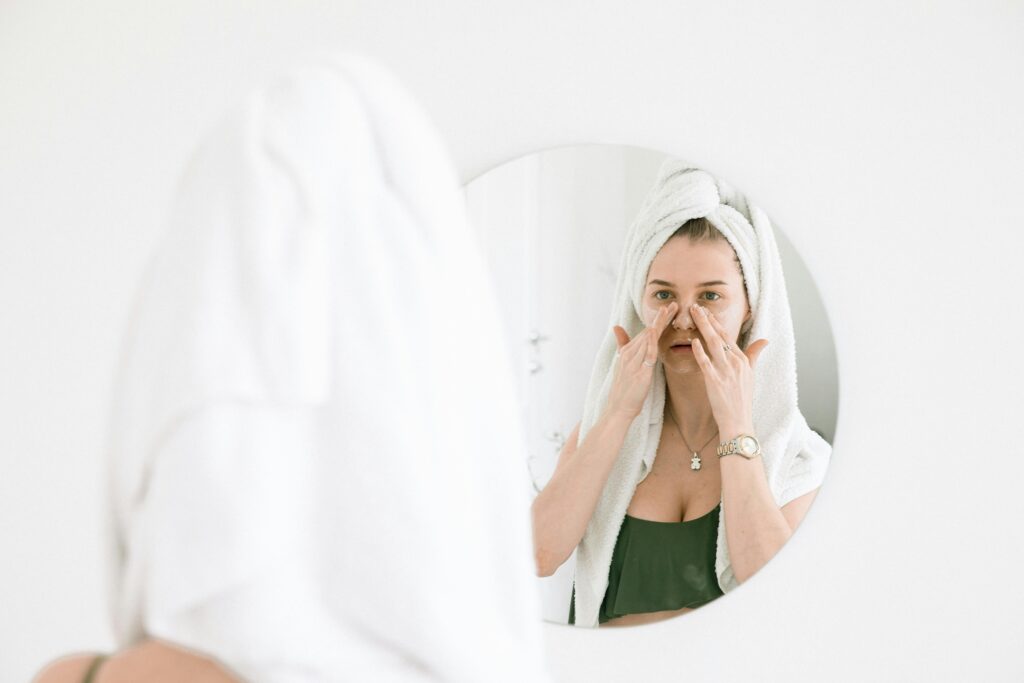
Order matters more than most people realize. Skincare products are formulated to work at specific skin depths and at specific pH levels. When you layer them incorrectly one product either blocks the next from absorbing properly or chemically interferes with it and reduces its effectiveness. A vitamin C serum applied after a thick moisturizer cannot penetrate the skin at all. A hyaluronic acid applied to completely dry skin in a dry environment pulls moisture upward and then loses it to evaporation. SPF applied before moisturizer sits unevenly and provides inconsistent protection.
Getting the order right does not require buying new products. It just requires understanding the simple logic behind why the sequence is what it is — and then applying that logic consistently every morning.
This guide explains exactly what that order is, why each step sits where it does, and what actually happens when you get it wrong.
The Logic Behind Skincare Layering
Before going through the steps it is worth spending a minute on why order matters — because once you understand the principle you can figure out where any new product belongs without having to look it up.
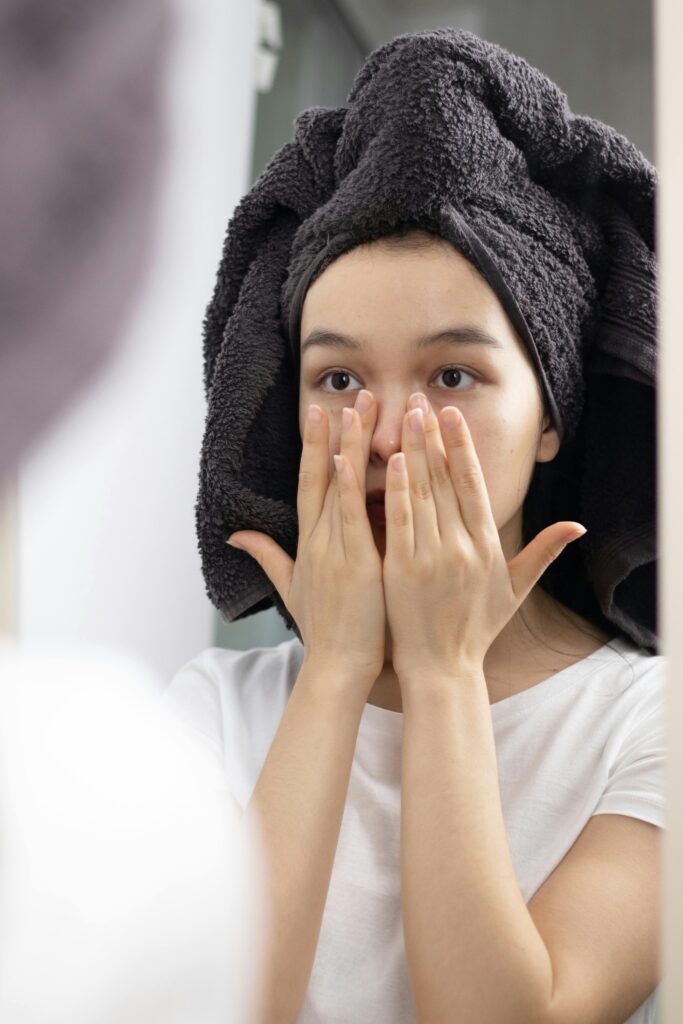
The foundational rule is thinnest to thickest. Skincare products are applied from the most watery and lightweight to the richest and most occlusive. This matters because thicker products form a partial barrier on the skin surface. Anything applied on top of them cannot penetrate as effectively as it would on clean skin. So your water-based actives — the ingredients doing the real work of treating your skin — always go on first when they can absorb unobstructed.
The secondary rule is pH order. Some active ingredients require a specific pH to function. Vitamin C in its most effective form — L-ascorbic acid — needs a low pH environment around 2.5 to 3.5. Niacinamide works at a higher pH. Applying them together simultaneously is fine but applying a high-pH product first and then a low-pH vitamin C on top can temporarily reduce the vitamin C’s efficacy. Allowing each product to absorb for thirty to sixty seconds before the next sidesteps this issue entirely.
The third rule is treatment before protection. Active treatment ingredients — vitamin C, niacinamide, peptides, hyaluronic acid — go before the products that seal them in — moisturizer and SPF. The moisturizer and SPF are the final layers that lock everything underneath into the skin and protect the surface for the rest of the day.
These three rules explain every step in the routine and every piece of advice that follows.
The Complete Morning Skincare Routine Order
Step 1 — Cleanser
Everything starts with clean skin. Not because your face is filthy when you wake up — but because whatever is sitting on your skin from overnight, whether that is your night cream, your body’s natural sebum production, sweat, or just the oils from your pillowcase, will dilute and interfere with every product you apply on top of it if you do not remove it first.
Whether you need a full cleanse in the morning or just a rinse with water depends on your skin type and what you used the night before. If you used a thick night cream or a retinol product, a gentle cleanser in the morning removes residue and preps the skin properly. If your skin is dry or sensitive and you used a lightweight serum the night before, rinsing with lukewarm water is genuinely sufficient — over-cleansing twice daily strips the barrier unnecessarily.

What to use: a gentle, pH-balanced cleanser that does not leave your skin feeling tight or squeaky after washing. Tight skin after cleansing means the cleanser disrupted your acid mantle — the protective slightly-acidic surface layer that everything else in your routine depends on. The CosRx Low pH Good Morning Gel Cleanser is one of the most widely recommended options for maintaining proper skin pH during morning cleansing. Available at Sephora.
For dry and sensitive skin the La Roche-Posay Toleriane Hydrating Gentle Cleanser provides a thorough cleanse without disrupting the barrier — a creamy formula that leaves skin comfortable and prepped rather than stripped. Available at Dermstore.
What not to do: scrub your face vigorously in the morning. The skin surface is delicate and friction creates microscopic inflammation that affects how products absorb and how the skin looks throughout the day. Pat dry with a clean towel — never rub.
Step 2 — Toner
Toner is the most misunderstood step in a skincare routine — largely because the word covers two completely different product categories that serve opposite purposes.
Old-school Western toners were alcohol-based astringents designed to remove the last traces of cleanser and make pores appear temporarily smaller. They were typically drying, occasionally irritating, and largely redundant now that modern cleansers rinse cleanly.
Modern hydrating toners — the ones worth using — do something entirely different. They restore the skin to its natural slightly-acidic pH after cleansing and deliver a lightweight first layer of hydration that prepares the skin surface to absorb everything applied afterward more effectively. Think of it less as a cleansing step and more as the preparation layer that makes the rest of your routine work harder.
The practical benefit is real. Skin that has been prepped with a hydrating toner absorbs serums more effectively than skin that goes straight from cleanser to serum. The slight dampness and pH restoration create an environment where active ingredients can penetrate rather than sit on the surface.
Apply toner by pressing it gently into clean skin with clean hands rather than wiping it across the face with a cotton pad. The pressing technique drives the toner into the skin rather than across it — and you use significantly less product per application.
The Klairs Supple Preparation Unscented Toner is fragrance-free, suitable for all skin types, and formulated with hyaluronic acid and botanical extracts that deliver genuine hydration alongside pH restoration. Available at Dermstore.
For oily and acne prone skin the Some By Mi AHA BHA PHA 30 Days Miracle Toner provides mild chemical exfoliation alongside hydration — streamlining the exfoliation and toning steps into one. Available at Sephora.
Step 3 — Vitamin C Serum
If there is one step in the morning routine that delivers the most return on investment it is vitamin C serum. Applied in the morning before SPF it provides antioxidant protection against the UV radiation and pollution that your skin will face throughout the day — creating a layer of defense that makes your sunscreen significantly more effective.
A study published on PubMed demonstrated that the combination of topical vitamin C and broad-spectrum SPF provided significantly greater protection against UV-induced skin changes than SPF alone. This synergistic effect is why vitamin C has become a morning-specific recommendation rather than something you can use at any time of day — its protective function is most valuable when applied before sun exposure.
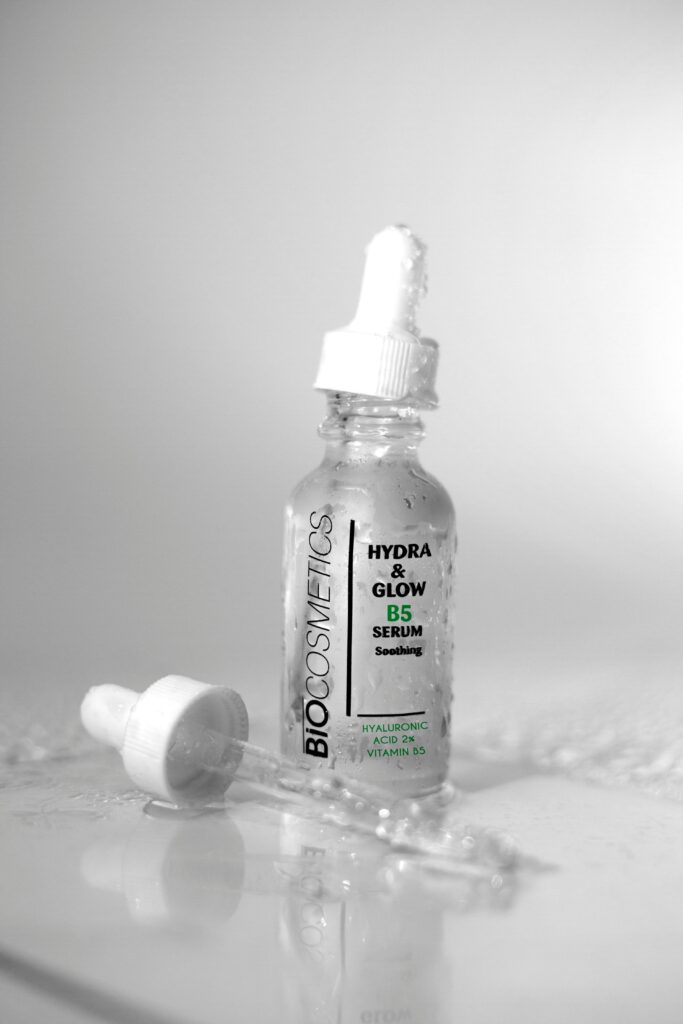
Beyond photoprotection vitamin C brightens the complexion, fades dark spots and post-acne hyperpigmentation, and stimulates collagen production over time. It is the most versatile active ingredient available for morning use and the clinical evidence behind it is stronger than almost any other over-the-counter skincare ingredient.
Apply three to four drops to clean skin after toner — pressed gently in rather than rubbed. Allow it to absorb for thirty to sixty seconds before the next step. The slight tingling some people experience with L-ascorbic acid formulas is normal and typically resolves within the first week of use.
The TruSkin Vitamin C Serum is one of the most consistently recommended beginner vitamin C options — an effective formula at an accessible price point that combines L-ascorbic acid with hyaluronic acid and vitamin E for a comfortable, stable application. Available at Sephora.
For sensitive skin the The Ordinary Ascorbyl Glucoside Solution 12% delivers vitamin C benefits through a more stable, more gentle derivative that is far less likely to cause the tingling associated with pure L-ascorbic acid. Available at Sephora.
Step 4 — Treatment Serum
This is the step where you address your specific skin concerns directly. After vitamin C — which serves an antioxidant and brightening function for everyone — your treatment serum is where personalization happens. What goes here depends entirely on what your skin actually needs.
For oily and acne prone skin: niacinamide serum regulates sebum production, minimizes pore appearance, reduces inflammation around breakouts, and fades post-acne dark marks. The Ordinary Niacinamide 10% + Zinc 1% is the most widely recommended option globally. Available at Sephora.
For dry and dehydrated skin: hyaluronic acid serum applied to slightly damp skin and sealed immediately with moisturizer delivers intense hydration that plumps fine lines and restores the luminosity that dehydration takes away. The Inkey List Hyaluronic Acid Serum uses multiple molecular weights for comprehensive hydration across skin layers. Available at Sephora.
For skin with hyperpigmentation: a targeted brightening serum containing tranexamic acid, alpha arbutin, or additional niacinamide addresses stubborn dark spots that vitamin C alone may not fully resolve. The Paula’s Choice 10% Niacinamide Booster is an excellent option at a more sophisticated formulation level. Available at paulaschoice.com.
For mature skin: a peptide serum supports collagen production and improves elasticity alongside the collagen-stimulating effects of vitamin C. The Ordinary Buffet is a well-formulated multi-peptide serum at an accessible price. Available at Sephora.
One serum per routine is enough for beginners. The temptation to layer multiple serums is understandable but most people see better results from one serum used consistently than from three used intermittently. Introduce new serums one at a time and give each one four to six weeks before adding another.
Step 5 — Eye Cream
Eye cream is optional — and it is worth being honest about that before recommending one. The skin around the eyes is thinner and more delicate than the rest of the face. It has fewer oil glands and shows dehydration and fatigue more visibly than anywhere else. A dedicated eye cream addresses this specifically by delivering hydration in a formula gentle enough for the periorbital area.
The honest truth is that a good moisturizer applied carefully around the eye area with your ring finger delivers most of the hydration benefit that a dedicated eye cream provides. The ring finger naturally applies less pressure than other fingers — important because the delicate eye area is easily damaged by pulling and tugging.
If you do use a dedicated eye cream, apply it after your serum and before your moisturizer — tapping it gently around the orbital bone with your ring finger. Never pull or drag. Never apply it directly onto the eyelid or inner corner.
The CeraVe Eye Repair Cream is a dermatologist-recommended option that addresses dark circles and puffiness alongside hydration in a fragrance-free formula safe for the most sensitive eye areas. Available at Dermstore.
Step 6 — Moisturizer
Moisturizer comes after all your serums and before your SPF. Its primary job in the morning routine is to seal in everything applied underneath — the hydrating toner, the vitamin C, the treatment serum — and create a smooth, hydrated surface for SPF to sit on evenly.
This sealing function is why moisturizer cannot be skipped even for oily skin. Without a moisturizer layer the hydrating ingredients in your serums sit on the surface and evaporate rather than being locked into the skin. The moisturizer is not doing the active treatment work — your serums are doing that. The moisturizer is ensuring all that work is not lost to evaporation before it has time to take effect.
Choose your moisturizer based on your skin type rather than based on how moisturizing it sounds. The heaviest, richest cream is not the best moisturizer — the best moisturizer is the one that provides adequate hydration for your skin type without congesting pores or creating a heavy, sticky base under SPF.
For oily and combination skin the Neutrogena Hydro Boost Water Gel provides genuine hydration in a lightweight gel format that absorbs completely within sixty seconds and leaves no greasiness. Available at Dermstore.
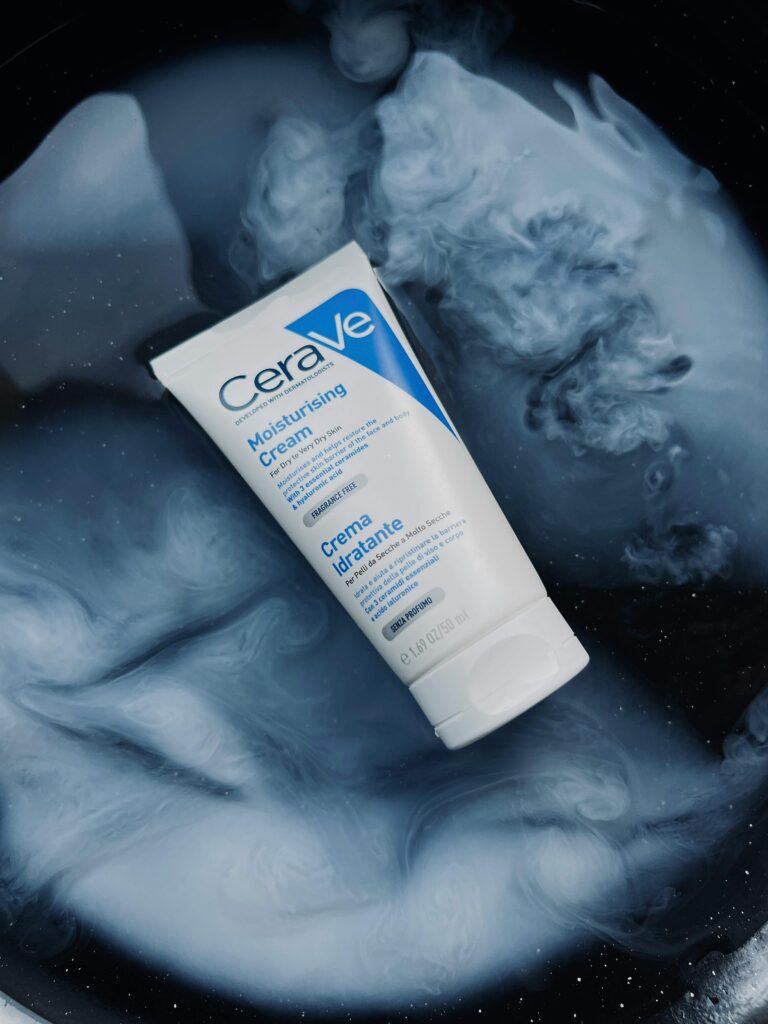
For dry skin the CeraVe Moisturizing Cream provides ceramide-based barrier repair alongside hyaluronic acid hydration in a formula specifically designed to restore rather than just temporarily hydrate compromised skin. Available at Dermstore.
For sensitive skin the La Roche-Posay Toleriane Double Repair Face Moisturizer combines niacinamide, ceramides, and prebiotic thermal water in the most consistently recommended formula for reactive skin. Available at Dermstore.
Allow your moisturizer to absorb for one to two minutes before applying SPF. This matters because SPF applied immediately on top of moisturizer that has not fully absorbed can mix with the still-wet moisturizer and create an uneven layer that provides inconsistent sun protection.
Step 7 — SPF
The most important step in your morning routine. Not the most exciting. Not the most glamorous. But the one that has more impact on your long-term skin health than every other step combined.
Daily broad-spectrum sun protection is the single most evidence-backed anti-ageing and skin health intervention available over the counter. According to the American Academy of Dermatology, up to 90% of visible skin ageing is caused by UV exposure. Consistent daily SPF use reduces the risk of the hyperpigmentation, collagen breakdown, and loss of luminosity that make skin look older and duller than it should.
SPF belongs last in the morning routine because it works by forming a protective layer on the skin surface. Anything applied on top of it — including your moisturizer or a powder — disrupts that layer and reduces its effectiveness. SPF is the final seal that protects everything underneath.
Use SPF 30 as an absolute minimum. SPF 50 is preferable especially if you spend meaningful time outdoors. Apply generously — the standard recommendation is a quarter teaspoon for the face alone. Most people apply significantly less than this which is the primary reason SPF performs worse in real life than it does in lab testing.
For oily and acne prone skin the La Roche-Posay Anthelios Clear Skin SPF 60 is a matte-finish formula specifically formulated to not cause breakouts while providing maximum protection. Available at Dermstore.
For normal to dry skin the EltaMD UV Clear Broad-Spectrum SPF 46 is one of the most universally beloved SPF formulas — lightweight, elegant, and gentle enough for even rosacea-prone skin. It also contains niacinamide for a bonus treatment benefit. Available at Dermstore.
For people who find most SPF formulas too heavy the Beauty of Joseon Relief Sun Rice and Probiotics SPF 50+ is a Korean-formulated option that feels like a lightweight serum rather than a sunscreen — no white cast, no greasiness, and a finish that actually improves the appearance of pores. Available at Sephora.
The Complete Morning Routine At A Glance
Step 1 — Cleanser. Remove overnight sebum, sweat, and product residue. Pat dry gently.
Step 2 — Toner. Restore pH balance and deliver the first layer of hydration.
Step 3 — Vitamin C serum. Antioxidant protection, brightening, and collagen support.
Step 4 — Treatment serum. Address your specific skin concerns — niacinamide, hyaluronic acid, peptides, or brightening actives.
Step 5 — Eye cream. Optional but beneficial for the delicate eye area.
Step 6 — Moisturizer. Seal in the active layers and create a smooth base for SPF.
Step 7 — SPF. The final, most important layer. Non-negotiable every morning.
Total time for this complete routine: approximately eight to ten minutes. Most of that is waiting thirty to sixty seconds between steps rather than actively applying products.
What Happens If You Get the Order Wrong
This is the practical section that explains why the order is worth following consistently rather than treating as optional guidance.
Applying SPF before moisturizer means the moisturizer dilutes the SPF layer when applied on top — creating an uneven protective barrier. You are technically wearing both products but neither is performing as well as it should.
Applying vitamin C after moisturizer means the vitamin C cannot penetrate through the occlusive moisturizer layer to reach the skin cells where it does its work. It sits on the moisturizer surface and delivers minimal benefit.
Applying hyaluronic acid as your last step without sealing it with moisturizer means it pulls moisture upward from deeper skin layers and then loses it to evaporation — leaving skin drier than before you applied anything.
Applying toner after serum rather than before means the toner is diluting the serum rather than preparing the skin to absorb it.
These are not minor technical errors — they are the difference between a routine that visibly improves your skin over time and one that feels like effort for disappointing results.
How Long to Wait Between Steps
The waiting time between steps is one of the most common questions about skincare routine order — and the answer is simpler than most content makes it.
Thirty seconds to one minute between most steps is enough. This gives each product time to absorb into the skin surface before the next layer is applied without extending your routine to an impractical length.
The exception is vitamin C. If you are using a pure L-ascorbic acid formula at a low pH, allow it to absorb for a full sixty seconds before applying anything on top. This gives the low-pH formula time to absorb before a higher-pH product is layered over it.
You do not need to wait five minutes between steps. You do not need to see the product visually disappear before moving on. Thirty to sixty seconds of gentle pressing while the product absorbs is sufficient for the vast majority of formulas.
Building Your Routine Around Your Skin Type
The seven step framework above applies to everyone — but the specific products within each step should be chosen for your individual skin. The right cleanser for oily skin is different to the right cleanser for dry skin. The right treatment serum for someone with hyperpigmentation is different to the one for someone dealing with breakouts.

Getting the product selection right for your specific skin is where most generic skincare advice falls short. A routine guide can tell you the correct order and the correct category of product at each step — but it cannot tell you which specific product within that category is right for your skin without knowing what your skin actually looks like and what it actually needs.
This is precisely what a personalized skin analysis provides. Rather than guessing which serum suits your skin type or which moisturizer is appropriate for your concerns, you start with an accurate assessment of what your skin needs and build your routine product by product from there.
The free AI skin analysis at yourskingpt.com/skin-analysis analyzes your skin from a selfie, asks five quick questions about your lifestyle and concerns, and produces a complete morning and evening routine with specific product recommendations matched to your individual skin. It takes fifteen seconds and is completely free with no account required.
You might also find our complete guides on why is my skin dull and how to fix it and vitamin C serum benefits for skin useful for understanding the specific roles of the most important morning routine ingredients.
Frequently Asked Questions
Do I need all seven steps in my morning routine? No. A three-step morning routine of cleanser, moisturizer, and SPF is a complete and effective routine. The additional steps add targeted benefits but are not requirements. If time or budget is a constraint start with the three essentials and add steps gradually as your routine develops.
Can I skip cleanser in the morning? For some skin types yes. If you have dry or sensitive skin and used only lightweight products the night before, rinsing with lukewarm water is sufficient. If you have oily skin or used heavy night products, a gentle cleanser in the morning ensures a clean surface for your morning routine.
Should I apply vitamin C before or after toner? After toner. Toner goes first to restore pH and prep the skin surface. Vitamin C then absorbs into the prepped skin more effectively than it would directly after cleansing.
Can I combine steps to save time? Some steps can be combined — a toner that contains hyaluronic acid covers both the toning and hydrating serum steps simultaneously. A moisturizer that contains niacinamide covers the treatment serum and moisturizer steps. These combinations are legitimate time-savers. What cannot be combined is SPF with treatment actives — dedicated SPF as the final step is non-negotiable.
What if a product causes tingling or stinging? Mild tingling from vitamin C is normal and usually resolves within a week. Stinging or burning that persists beyond sixty seconds indicates either a reaction to an ingredient, a formula that is too strong for your skin barrier’s current condition, or a product applied in the wrong order. If stinging persists after correcting the order, discontinue the product and allow your barrier to recover before reintroducing it.
The Bottom Line
The correct morning skincare routine order is cleanser, toner, vitamin C, treatment serum, eye cream, moisturizer, and SPF. The logic behind this sequence is simple — thinnest to thickest, treatments before protection, actives before occlusion.
Following this order consistently transforms the effectiveness of the products you are already using without requiring you to buy anything new. The routine you have been building works better when the layers are applied in the sequence that allows each one to do its job properly.
The products within that framework should be chosen based on your specific skin type and concerns. Generic recommendations only go so far. Your skin is individual and the routine that works best for you is built around what your skin actually needs rather than what works on average.
The free AI skin analysis at yourskingpt.com/skin-analysis builds that routine for you — free, in fifteen seconds, based on your actual skin.
This article is for informational purposes only and does not constitute medical advice. Always consult a qualified dermatologist for persistent skin concerns or conditions.